Can Hair Transplants Stop Future Hair Loss? The Biological Truth Behind Enduring Restoration

Updated: Jun 8

One of the most profound responsibilities of a clinical architect is to speak the absolute, unvarnished truth to the patient. In the high-volume, commercialized medical tourism industry, patients are frequently sold an alluring but biologically impossible narrative: that a hair transplant is a permanent, one-time cure for baldness.
When a discerning patient asks, "Can a hair transplant stop my future hair loss?" the honest, scientifically grounded answer is definitively no.
A hair transplant does not stop, pause, or cure the underlying biological mechanisms of hair loss. Surgery is an architectural intervention, not a genetic remedy. However, understanding this truth is not a cause for discouragement. In fact, accepting the progressive nature of hair loss is the very foundation of world-class, bespoke hair restoration.
When you acknowledge how the scalp will age over the coming decades, you empower your clinical team to design a master blueprint that guarantees your dignity and aesthetic harmony for the rest of your life. This masterclass explores the biological reality of progressive hair loss, the danger of short-term surgical planning, and the strategies we use at Eva Estetica to outsmart the aging process.
Table of Contents: The Architecture of Enduring Restoration
The Biology of Future Hair Loss: Understanding DHT

To understand why future hair loss occurs even after a successful transplant, we must look at the microscopic hormonal environment of the scalp.
Androgenetic alopecia (male pattern baldness) is driven by a hormone called Dihydrotestosterone (DHT). In men who are genetically predisposed to hair loss, the hair follicles on the top, front, and crown of the scalp possess specific cellular receptors that are highly sensitive to DHT. Over time, DHT binds to these receptors and slowly suffocates the follicle. The hair shaft becomes thinner, shorter, and lighter in color—a process known as miniaturization—until the follicle eventually dies and the skin heals over it.
However, the hair follicles located in a horseshoe-shaped ring at the back and sides of the head (the Safe Donor Zone) are biologically distinct. Due to a genetic quirk, these follicles do not possess the same DHT receptors. They are functionally immune to the hormone that causes baldness.
When a master surgeon performs a follicular unit extraction (FUE), they are taking these genetically resistant follicles from the back of the head and relocating them to the balding areas at the front.
The Permanent and the Temporary
Once implanted, the transplanted hair retains its genetic immunity to DHT. The transplanted hairs will stay with you permanently. They will grow, they can be cut, and they will endure for the rest of your life.
The critical reality, however, is that the native hair sitting immediately behind your newly transplanted hairline is still entirely susceptible to DHT. The surgery did absolutely nothing to alter the genetics of those original hairs. If they were destined to fall out over the next ten years, they will continue to miniaturize and eventually disappear, regardless of the flawless new hairline sitting in front of them.
Deep Dive: Understanding why a transplant does not stop native hair loss begins with the biology of DHT and follicular miniaturization. For a clearer explanation of the underlying pattern, read our guide to [Male Pattern Baldness Explained: Genetics, DHT, and Hair Loss Planning].
The Age Factor: Why Timing Your Surgery is Critical

One of the most common scenarios we encounter at Eva Estetica is a patient in their early twenties who is deeply distressed by a receding hairline and eager for immediate surgical correction. The emotional weight of early hair loss is undeniable, and the desire to reclaim your confidence as quickly as possible is completely understandable. However, moving forward with a hair transplant on a young patient experiencing active, rapid hair loss often carries significant long-term aesthetic risks that must be carefully weighed.
Hair loss is notoriously unpredictable in your early twenties because the genetic trajectory of your Androgenetic Alopecia is still unfolding. If a surgeon aggressively rebuilds a dense, flat hairline at age 22, and the patient's native hair continues to recede aggressively behind it over the next decade, a severe "Island Effect" can occur. In these cases, the patient may find themselves without enough remaining donor hair to properly camouflage the newly exposed bald areas by the time they reach their thirties.
This does not mean a hair transplant is universally impossible for younger men; rather, it means the approach must be highly conservative and meticulously planned. For a younger candidate to be safely considered for surgery, they typically need to demonstrate that their hair loss has been successfully stabilized through a committed medical regimen (such as Finasteride or Minoxidil) for at least a year. Furthermore, the surgical design must prioritize a mature, age-appropriate hairline rather than an overly aggressive, adolescent one to conserve precious donor grafts.
Ethical surgical planning often involves waiting for your specific balding pattern to declare itself more clearly—either naturally as you age into your late twenties, or artificially through continuous medical therapy. If our medical team advises delaying your surgery, it is rarely a closed door. Instead, it is a collaborative pause. It is a strict medical safety protocol designed to ensure that when we do operate, we have the biological resources to protect your appearance not just for the next five years, but for the next fifty.
The Uncanny Valley: The Tragedy of the "Island Effect"
When a clinic operates purely as a commercial enterprise, they focus exclusively on delivering a dramatic "before and after" photo for their Instagram feed. They cater to the patient's immediate desire by designing a low, dense, aggressive hairline, completely ignoring the patient's long-term biological trajectory.
This approach frequently results in a devastating aesthetic consequence known as the "Island Effect."
Imagine a 28-year-old man with early-stage temple recession. He travels to a mass-market clinic and receives 3,500 grafts packed densely into his hairline to restore his teenage appearance. He leaves thrilled. But over the next ten years, his genetic hair loss progresses aggressively. His native hair in the mid-scalp and crown completely falls out.
By age 38, he is left with a thick, straight "wall" of transplanted hair hovering an inch above his brow, separated from the rest of his hair by a massive, unnatural gap of bald scalp. He has been left with an aesthetic result that looks profoundly artificial and removes all natural dignity from his face. Worse still, because the commercial clinic aggressively over-harvested 3,500 grafts for his first surgery, his donor area is bankrupt. He has no biological reserve left to fill in the new bald spots.
He is permanently trapped with an unnatural appearance. This is the ultimate cost of viewing a hair transplant as a short-term transaction rather than a lifelong architectural blueprint.
The Comprehensive Tri-Pillar Strategy: Protecting the Native Canvas

For patients who are excellent candidates, how is the reality of future hair loss combated? A highly sophisticated, multi-faceted strategy must be utilized.
While surgery replaces the hair that is permanently lost, advanced medical management is required to fortify the native hair that remains. By stabilizing the native hair, the canvas is effectively frozen, allowing the clinical architect to restore the hairline with absolute confidence.
1. Cellular and Topical Management (The Biological Shield)
Localized, non-systemic therapies are frequently integrated to strengthen native follicles naturally. High-density Platelet-Rich Plasma (PRP) and advanced mesotherapy protocols isolate the body’s own concentrated growth factors and introduce them directly to the scalp to biologically rejuvenate miniaturized hairs. Furthermore, targeted topical vasodilators (like clinical-grade Minoxidil) increase the vascular blood flow directly to the struggling follicles at the root level.
2. The Systemic Conversation (DHT Blockers)
For patients comfortable with systemic management, oral medications like Finasteride or Dutasteride are the most effective clinical tools for halting the conversion of testosterone into DHT. By lowering systemic DHT levels, these medications can freeze progressive hair loss in its tracks. However, an ethical institute must engage in a highly nuanced conversation about the potential side effects of systemic medications, allowing the discerning patient to make an informed, autonomous choice about their biological management.
3. Nutritional Diagnostics and Environmental Mitigation
Beyond cellular treatments and hormonal management, the biological health of the scalp is deeply influenced by internal nutrition and external stressors. Hair follicles are among the most metabolically active cells in the human body; they require precise physiological fuel to thrive.
Targeted Supplementation: Blindly consuming generic multivitamins is an inefficient medical strategy. Optimal follicular function relies on specific micronutrients—most critically Vitamin D3, Zinc, Iron (Ferritin), and B-complex vitamins. Consumption should be guided by comprehensive blood diagnostics rather than guesswork. High-quality, bioavailable supplements should be taken specifically to correct verified deficiencies, ideally alongside dietary adjustments.
The Cortisol Factor: For high-performing professionals and executives, chronic psychological stress is a severe biological antagonist. Sustained, elevated cortisol levels push healthy hair follicles prematurely out of the growth phase and into the telogen (shedding) phase.
Environmental Oxidative Stress: Modern urban environments expose the scalp to heavy pollution, hard water, and UV radiation, all of which degrade the cellular micro-environment of the scalp.
Mitigating these factors through disciplined sleep hygiene, stress-reduction practices, and clinically targeted nutritional support is not merely a "wellness" concept—it is a strict medical necessity for protecting a lifelong hair restoration investment.
What If You Cannot Tolerate DHT Blockers? Alternative Pathways
A very common anxiety among patients is the fear of side effects associated with oral DHT blockers like Finasteride. If you have experienced adverse reactions in the past, or simply prefer to avoid systemic medications, you are not disqualified from having a natural, successful hair transplant. However, it requires a shift in the surgical strategy.
If you cannot take oral medications to shield your native hair, we must assume that your progressive hair loss will continue unabated. In this scenario, our surgical team will:
Adopt an Conservative Design: We will place your hairline higher and more maturely than usual, strictly conserving your donor grafts.
Plan for Multiple Surgeries: We will mathematically map out a multi-stage approach, saving enough grafts to perform a secondary "fill-in" procedure 5 to 10 years later as your native hair recedes further.
Utilize Localized Therapies: We will lean heavily on non-systemic alternatives, such as Topical Finasteride (which stays localized to the scalp tissue), Low-Level Laser Therapy (LLLT), and regular Platelet-Rich Plasma (PRP) treatments to prolong the life of your native hair without affecting your broader physiology.
Architectural Foresight: Designing for the Decades
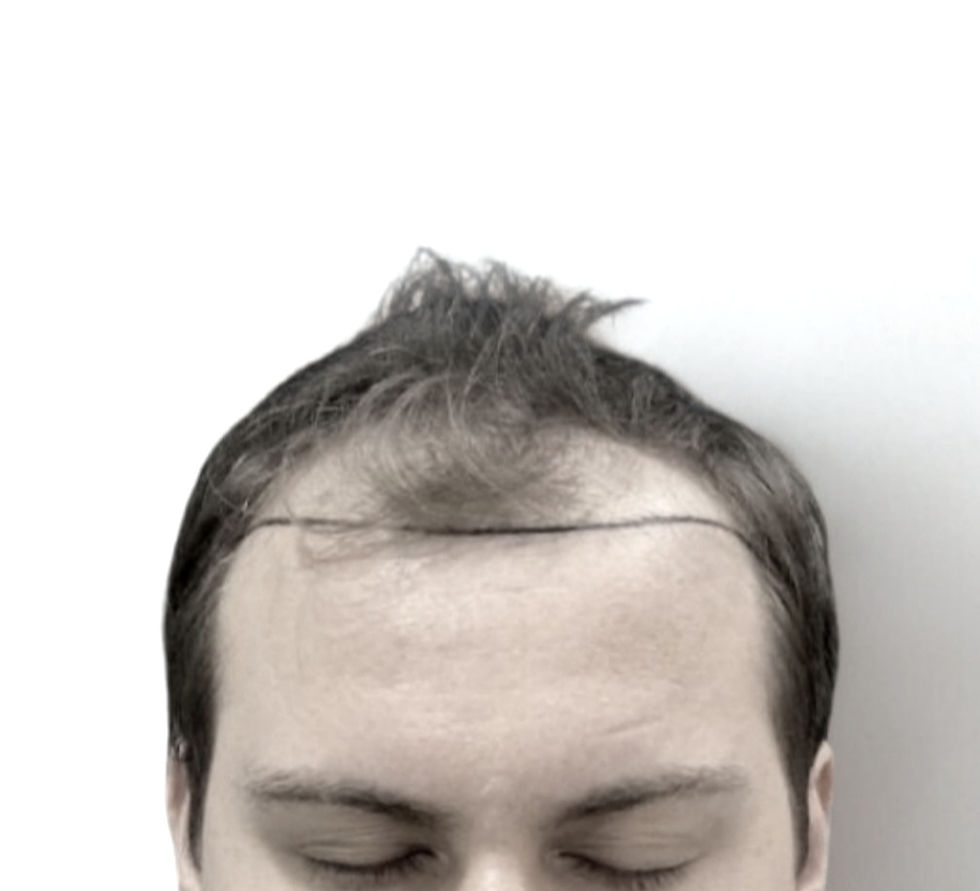
For patients who cannot, or choose not to, utilize preventative medications, the burden of future-proofing the result falls entirely on the architectural design of the surgery itself.
A master clinical architect designs a transplant not for the man sitting in the chair today, but for the man he will become at fifty, sixty, and seventy years old.
Age-Appropriate Hairline Design: We design hairlines with natural, calculated temporal recession. A mature, swept-back frontal curve looks incredibly distinguished at any age. If your native hair continues to thin behind a conservative hairline, the transition looks natural, rather than jarring.
Donor Area Stewardship: We treat your biological reserve like a precious, finite asset. By extracting conservatively (often limiting primary sessions to 2,500–3,000 grafts), we leave thousands of healthy follicles safely banked at the back of your head.
The Philosophy of Staged Restoration: If you experience profound native hair loss ten years from now, you will still possess the donor capital required for a secondary "touch-up" procedure. We can seamlessly blend new grafts into the newly thinned areas, ensuring your aesthetic harmony is preserved flawlessly through every decade of your life.
Deep Dive: Understanding how a natural result relies on both immediate artistry and long-term planning is the core of our philosophy. For a comprehensive overview of how we design for the future, read our central masterclass: [The Complete Guide to Natural Hair Transplants]
Conclusion: The Peace of Mind in Masterful Forecasting
When the mass-market medical tourism industry reduces hair restoration to a quick, transactional fix, they do their patients a profound disservice. Selling the illusion that a single surgery will permanently halt the complex biological machinery of genetic hair loss is not just misleading—it is medically unethical.
The truth is that your scalp is a living, evolving canvas. While a premium hair transplant permanently restores the hair that was lost, it does not freeze time. The native hair surrounding your new grafts remains vulnerable to the slow progression of DHT and the natural aging process.
However, acknowledging this biological reality is not a limitation; it is the ultimate advantage.
True luxury in medical aesthetics is defined by foresight. When you choose an architectural approach to hair restoration, you are investing in a master blueprint designed to outsmart time. By utilizing a dual-front strategy—protecting your existing native hair through advanced medical management, and executing an age-appropriate surgical design that meticulously preserves your finite donor area—we remove the anxiety of the unknown.
At Eva Estetica Istanbul, we do not view your surgery as the end of your hair loss journey; we view it as the beginning of a lifelong, dignified partnership. We build hairlines that look magnificent today, with the strategic biological reserves safely banked to ensure they look just as magnificent three decades from now.
That is the difference between purchasing a cosmetic procedure and commissioning a lifelong work of art.
FAQ: Future Hair Loss & Surgical Forecasting
1. Does a hair transplant stop my natural hair from falling out?
No. A hair transplant permanently replaces lost hair with DHT-resistant follicles, but it does not stop the biological progression of your native hair loss. Your existing native hair remains vulnerable to genetic thinning as you age.
2. Will my transplanted hair fall out over time?
No. The grafts harvested from your Safe Donor Zone at the back of your head are genetically immune to DHT (the hormone that causes baldness). Once successfully implanted and healed, these specific hairs are permanent and will grow for the rest of your life.
3. What is the "Island Effect" in hair transplants?
The Island Effect occurs when a young patient receives a dense, low hairline, but continues to lose their native hair behind it over the next decade. This leaves an isolated "wall" of transplanted hair at the front with a bald gap behind it, creating a highly unnatural appearance.
4. How does Eva Estetica prevent the Island Effect?
We prevent it through "Architectural Foresight." We design age-appropriate hairlines with natural temporal recession. Crucially, we strictly conserve your donor area during the first surgery, ensuring you have enough grafts banked for a future procedure if your native hair recedes further.
5. Why do you turn some patients away from surgery?
Operating on a patient with highly unstable hair loss, a depleted donor area, or someone who is too young is an architectural failure. We actively disqualify candidates based on strict medical criteria to protect them from future aesthetic complications.
6. Do I have to take Finasteride or Dutasteride after a hair transplant?
It is highly recommended for stopping future native hair loss, but it is not strictly mandatory. If you choose not to take systemic DHT blockers, we must design a highly conservative hairline and strictly bank your donor area for inevitable future thinning.
7. Can PRP therapy stop future hair loss?
Platelet-Rich Plasma (PRP) does not alter your genetics, but it acts as a powerful biological shield. It introduces concentrated growth factors to your scalp, which rejuvenates miniaturizing follicles, thickens existing native hair, and extends its life cycle without systemic side effects.
8. What happens if I lose more hair 10 years after my transplant?
Because our clinical architects practice strict Donor Area Stewardship, your donor reserve will not be depleted. You can easily return for a staged secondary procedure, where we will seamlessly blend new grafts into the newly thinned areas to maintain aesthetic harmony.
9. Can I get a hair transplant at age 21?
In most cases, we strongly advise against it. At 21, your final pattern of baldness has not yet revealed itself. Implanting a permanent hairline based on an unpredictable canvas often leads to severe aesthetic issues in your 30s. We recommend medical stabilization first.
10. What is Diffuse Unpatterned Alopecia (DUPA) and why does it matter?
DUPA is a condition where a patient experiences thinning not just on top, but also in the donor area at the back of the head. Patients with DUPA are generally not candidates for surgery, as the extracted grafts are not immune to DHT and will eventually fall out even after transplantation.
Academic Sources and Clinical Literature
The surgical planning protocols, diagnostic frameworks, and medical therapies discussed in this guide are deeply rooted in peer-reviewed dermatological and plastic surgery research. For further reading on the biological progression of hair loss and the clinical necessity of long-term surgical forecasting, please consult the following texts:
1. Effects of Finasteride (1 mg) on Hair Transplant: A Randomized, Double-Blind Study Leavitt M, Perez-Meza D, Rao NA, et al. Dermatologic Surgery (2005). A landmark clinical trial that perfectly illustrates the "Dual-Front Strategy." This study proves that patients who combine hair transplant surgery with Finasteride experience significantly superior visual density, as the medication actively prevents the progressive miniaturization and loss of the native hair sitting behind the transplanted grafts.
View on PubMed: https://pubmed.ncbi.nlm.nih.gov/16188178/
2. Is Every Patient of Hair Loss a Candidate for Hair Transplant? Deciding Surgical Candidacy Garg S, Garg S. Indian Journal of Plastic Surgery (2021). An essential surgical safety review that directly addresses the "Age Factor" and the dangers of operating prematurely. The literature explicitly outlines why performing aggressive hairline restorations on young patients (early twenties) with active, unmanaged hair loss leads to severe aesthetic complications (the "Island Effect") as their balding progresses in later decades.
View on PubMed Central (PMC): https://pmc.ncbi.nlm.nih.gov/articles/PMC8719975/
3. Trichoscopy in Alopecias: Diagnosis Simplified Jain N, Doshi B, Khopkar U. International Journal of Trichology (2013). The clinical foundation for our "Miniaturization Mapping." This dermatological research explains how surgeons use microscopic trichoscopy to examine the scalp, mathematically calculate the ratio of miniaturized hairs to terminal hairs, and accurately predict the future progression of a patient’s genetic hair loss before a surgical plan is ever drawn.
View on PubMed Central (PMC): https://pmc.ncbi.nlm.nih.gov/articles/PMC3927172/
4. Androgenetic Alopecia: Pathogenesis and Clinical Classifications Ho CH, Sood T, Zito PM. StatPearls Publishing (2024). An authoritative clinical overview detailing the physiological mechanisms of Androgenetic Alopecia. This text explains the biological principle of "Donor Dominance"—verifying why transplanted hair remains permanent, while the native hair surrounding it remains vulnerable to DHT and requires ongoing medical management.
View on NCBI Bookshelf: https://www.ncbi.nlm.nih.gov/books/NBK430924/
5. Complications in Hair Transplantation Kerure AS, Patwardhan N. Journal of Cutaneous and Aesthetic Surgery (2018). A critical review highlighting the long-term aesthetic complications of poorly planned surgeries. The literature details the risks of depleting the donor area too early in a patient's life and validates the necessity of conservative architectural planning, especially when dealing with the unpredictable outward expansion of the vertex (crown).
View on PubMed Central (PMC): https://pmc.ncbi.nlm.nih.gov/articles/PMC6371733/

Comments