FUE Hair Transplant in Istanbul
“Precision restoration guided by proportion and restraint.”

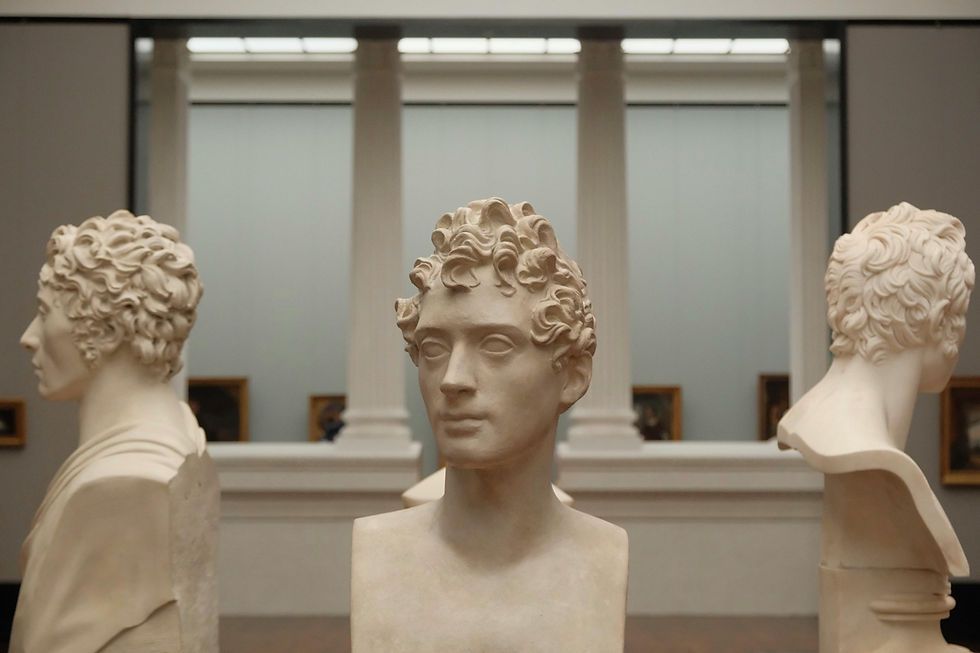
“Order and proportion are the essence of beauty.” — Vitruvius
Foundational restoration, guided by structure
FUE, or Follicular Unit Extraction, remains one of the most important methods in modern hair restoration. Its strength lies not in novelty, but in flexibility: the ability to harvest individual follicular units with precision and redistribute them according to a long-term plan that respects both the face and the donor area.
At Eva Estetica, FUE is not approached as a volume-driven procedure. It is approached as a structural one. The method allows us to restore density, rebuild the frontal frame, and preserve future options through measured donor use and controlled placement.
This page explains what FUE is, why it remains foundational in hair restoration, and how we use it in service of natural, lasting results.
What is FUE (Follicular Unit Extraction)
FUE stands for Follicular Unit Extraction. In this method, individual follicular units are harvested from the donor area — usually the back and sides of the scalp and then redistributed into areas affected by thinning or loss.
Because grafts are extracted one by one rather than through a linear strip, FUE offers flexibility in donor management and allows treatment to be adapted to different patterns of loss. This makes it especially suitable for broader restoration, carefully staged planning, and cases in which the long-term use of the donor area must be considered from the beginning.
FUE is therefore best understood not as a trend, but as a foundational method.
It provides the structural basis for many of the most natural and enduring results in modern hair restoration.

Why FUE Remains Foundational
FUE continues to hold an important place in hair restoration because it offers something essential: control.
Not control in a narrow technical sense alone, but control over how the treatment is built how donor hair is used, how coverage is planned, how density is distributed, and how future options are preserved.
In many patients, restoration is not only about one visible area. It may involve the frontal third, the mid-scalp, or a broader pattern of progressive loss that will continue to evolve with time. FUE allows treatment planning to respond to that complexity with more flexibility than methods designed around one fixed route of extraction.
Its value lies in this balance:
-
enough adaptability to support different designs
-
enough precision to create natural transitions
-
enough donor awareness to preserve long-term options
This is why FUE is often the foundation of a treatment plan. It allows restoration to begin from structure rather than urgency.
At Eva Estetica, we do not use FUE to pursue the greatest possible number of grafts in a single day. We use it to create a result that will still feel coherent years later.
The Eva Estetica Approach to FUE
Technique alone does not create naturalness.
The sequence of decisions around it does.
At Eva Estetica, FUE is guided by the same principles that shape all our work: design first, donor stewardship, and restraint in the service of long-term realism.
Design before method
A hair transplant begins with the face. Hairline position, temple balance, density transitions, and age-appropriate framing are considered before extraction begins. FUE is then used as the method through which that design is built.
Measured donor use
The donor area is finite. A refined treatment plan protects its appearance while preserving future options. Extraction is therefore approached with discipline rather than speed.
Structural density
Natural fullness is not created by uniform packing. It is created through layered placement — softer at the edge, stronger behind, and always in relation to the broader architecture of the face.
Limited daily scheduling
We limit daily case volume to maintain focus. FUE is a method that rewards concentration, not haste.
These are not marketing preferences.
They are the operating principles that protect outcomes from becoming mechanical.

Hairline Design and Structural Density
The most visible outcome of a transplant is often the hairline. The most important outcome is whether it looks as though it belongs.
FUE is especially effective when used to create structure through controlled density and careful framing. A natural hairline is not a hard border placed across the forehead. It is a composition. It contains softness at the front, subtle irregularity at the edge, and a gradual increase in visual weight behind it.
This is where FUE performs particularly well. Because individual follicular units can be selected and redistributed with flexibility, the method supports the layered approach needed for believable frontal restoration. Single-hair grafts can be used to soften the leading edge, while stronger units can provide support just behind it to create depth without harshness.
Beyond the hairline itself, density must also be judged in relation to the face. A result that looks “full” in isolation may still look unnatural if the line is too low, too abrupt, or too dense for the patient’s features. Structural density means building a result that reads correctly from the front, in profile, and over time — not simply one that appears dramatic in a static image.
That is the difference between coverage and composition.
The process considered, documented, humane
1 Private consultation & photographic analysis
A thorough, private assessment begins the process. We record standardised images, measure donor density, map hair direction, and discuss realistic goals. This stage yields a personalised plan — not a promise of a number.
What we document: baseline photos, donor map, proposed hairline overlays, and expected timeline.
2 Design & consent
Design is a conversation. We present an age-appropriate hairline proposal, explain density trade-offs, and outline donor-preservation strategy. Informed consent is documented clearly: expectations, limitations, and staged options if needed.
3 Procedure day extraction and implantation
Extraction uses micro-punches and gentle handling to preserve follicle integrity. Grafts are stored in controlled conditions and placed according to the design plan. Single-hair grafts are used at the leading edge; grouped grafts create background density
Speical note: Our daily case scheduling is limited to protect focus and graft handling time quality, not throughput.
4 Recovery & structured aftercare
We provide a clear, aftercare plan: washing protocols, activity guidance, and a photographic schedule for follow-ups. Remote assessments are available to international patients; in-person checks are scheduled at meaningful milestones. (learn more about our aftercare instructions)
Donor ethics preservation as a standard
Donor area management is expert stewardship. We map safe extraction zones, calculate extraction density per cm², and preserve corridors of reserve. If a patient requires large volume, we advise staged sessions — never reckless harvesting.
A patient’s future options depend on careful present decisions. That is how we measure responsibility.
Hairline Architecture
A natural hairline is shaped through small variations rather than obvious lines. Single-hair grafts at the leading edge, staggered spacing, and soft irregularities all help the transition appear as native growth rather than visible intervention.
At Eva Estetica, hairline design is approached with proportion, foresight, and restraint. We consider how the line relates to the face today, how it may age over time, and how density should gather behind it without becoming abrupt.
This is design rather than decoration.
(Understanding hairline architecture →)
Who Is Best Suited to FUE?
FUE may be particularly suitable for patients who need:
-
broader structural restoration
-
reconstruction across the frontal third or mid-scalp
-
flexible donor planning
-
a method that supports staged treatment over time
-
a natural hairline combined with wider density work
It is also often appropriate in cases where long-term donor management matters as much as the immediate result.
This does not mean FUE is automatically preferable in every situation. Some patients may benefit from the implantation precision of DHI or the recipient-site refinement of Sapphire FUE in selected zones. The important point is that FUE remains one of the most adaptable and reliable methods when restoration must be planned as an architectural whole rather than a narrow correction.
Recovery and Maturation
Recovery after FUE follows the normal biological rhythm of modern hair restoration.
In the first days, the scalp heals and the treated areas remain delicate. Small crusts may form, and mild swelling or tenderness can occur. In the following weeks, transplanted hairs often shed as expected. This is part of the normal cycle and not a sign that the treatment has failed.
Early regrowth usually begins gradually over the following months. What starts as fine new emergence becomes more established with time, and the result continues to mature through texture, thickness, and integration.
The most convincing FUE results are rarely immediate.
They unfold progressively.
This gradual emergence is part of what makes the final outcome believable. Hair that appears too suddenly can look artificial in concept, even if the biology is successful. Hair that develops with time tends to feel more natural because it settles into the face rather than arriving as a dramatic event.
For this reason, recovery is not separate from the result. It is part of how the result becomes real.

Practical Details: What to Bring, What to Expect on the Day (Pre Treatment Preparation)
A well-prepared day allows the procedure to unfold with greater ease.
Patients are usually advised to arrive with clean, dry hair and to follow any specific pre-treatment guidance given in advance, including instructions on caffeine where appropriate. It is also helpful to bring any current medications together with a list of supplements so that all relevant information is available on the day.
FUE is typically performed as a day-case procedure under local anaesthesia. The treatment is structured carefully, with attention to comfort, pacing, and clinical clarity throughout.
Following the procedure, patients should plan for a calm return journey and a quiet first 48 to 72 hours of rest. We provide a personalised checklist during consultation so that preparation remains simple, clear, and tailored to the individual case.
Proof Without Noise
Results do not need to be exaggerated in order to be persuasive.
At Eva Estetica, we prefer to show outcomes in a way that allows the patient to judge what matters: hairline architecture, density distribution, donor preservation, and how naturally the restoration settles into the face.
A good FUE result should not rely on dramatic language.
It should withstand ordinary scrutiny.
This is why we value:
-
standardised before-and-after photography
-
honest timelines
-
natural styling and realistic presentation
-
case selection that reflects judgment, not spectacle
The strongest work often appears quieter than the most aggressively marketed work. That quietness is not a weakness. It is often the sign that proportion has been respected.
Private Consultation
Hair restoration begins with understanding.
During a private consultation, the structure of your hair loss, donor density, and long-term treatment options are carefully evaluated.
This first discussion allows us to determine whether Follicular Unit Extraction is the appropriate approach for you.
Beyond the Technique
FUE, DHI, and Sapphire FUE are not isolated procedures, but part of a broader restoration journey shaped by consultation, preparation, and long-term care.
-
You can also explore: