Bespoke Hair Transplant Istanbul: The Art and Science of Advanced FUE


A hair transplant is not merely a cosmetic procedure; it is a permanent, surgical alteration of your facial geometry. The hairline we design today is the frame through which the world will view you for the rest of your life.
Yet, as Istanbul has cemented its status as the global capital of hair restoration, a dangerous commodification has taken hold. The profound artistry required to seamlessly rebuild a human hairline has increasingly been replaced by the "assembly line"—a transactional, high-volume model focused on maximizing daily patient numbers and extracting massive graft counts. In this factory-like environment, the scalp is treated as a generic canvas to be uniformly filled. This complete lack of individualization is exactly what produces the harsh, artificial, and pluggy results that discerning patients rightfully fear.
At Eva Estetica, we believe true restoration requires a return to uncompromising private medicine. Modern, high-end hair transplantation sits at the absolute intersection of two unforgiving disciplines. On one side is the rigorous science: the microscopic precision of tissue handling, cellular survival protocols, and the ethical, long-term preservation of your finite donor reserves. On the other side is the art: the surgical mastery of facial proportion, growth vectors, light reflection, and elegant visual subtlety.
This masterclass deconstructs the design-first philosophy of a truly bespoke hair transplant. We will explore why absolute naturalness matters infinitely more than raw, transactional density, how advanced surgical tools must always be guided by an architectural vision, and why this deliberate balance of art and science produces results that look entirely inevitable—as if you had never lost your hair in the first place.
Table of Contents:
[Beyond the Assembly Line: Defining a Bespoke Hair Transplant in Istanbul]
[The Diagnostic Foundation: What a True Bespoke Consultation Must Include]
[The Science: Deconstructing the "Best Hair Transplant Technique"]
[The Science: Biological Preservation in High-End Hair Restoration]
[The Istanbul Factor: Where Craftsmanship Meets Infrastructure]
Beyond the Assembly Line: Defining a Bespoke Hair Transplant in Istanbul

The term "bespoke" is frequently used in luxury tailoring to describe a garment cut precisely for one individual's unique anatomical measurements. In the realm of elite private medicine, a bespoke procedure demands the exact same level of individualized, unhurried craftsmanship.
Conventional hair restoration often relies on standardized templates—applying similar hairline shapes and extraction patterns to a wide variety of patients. A truly bespoke hair transplant, however, respectfully discards the template. It recognizes that every patient presents a unique biological canvas, requiring a design that meticulously accounts for their specific age, ethnicity, and underlying facial bone structure.
This approach acknowledges that "density" is merely a mathematical number, whereas "naturalness" is a highly complex biological orchestration. During initial remote consultations, patients frequently ask, "How many grafts do I need?"—hoping a single, high number will guarantee a flawless aesthetic result. In reality, sheer volume is only part of the equation. Placing thousands of grafts without careful consideration of angle, transition, and flow can inadvertently draw attention to the procedure itself.
True naturalness relies on the elegant distribution of those grafts. It requires placing them where they will manipulate light and shadow most effectively, enhancing the observer's perception of your facial framing while carefully preserving your finite donor supply. It is the practice of elegant restraint: prioritizing structural proportion over excess, and long-term foresight over sheer volume.
The Diagnostic Foundation: What a True Bespoke Consultation Must Include

In the commercial medical tourism sector, the "consultation" is frequently reduced to a high-pressure sales pitch. Patients submit a few hastily taken photographs and receive an instant, automated quote promising "maximum density" and an "unlimited" number of grafts. This is not a medical diagnosis; it is a transactional negotiation.
A true bespoke hair transplant is built on a foundation of absolute clinical transparency. It requires an exhaustive, unhurried diagnostic phase before any surgical or financial commitment is ever made. Whether conducted remotely or in our Istanbul clinic, a premium medical consultation must definitively include:
Microscopic Donor Auditing: We do not simply glance at the back of your head to guess how many grafts we can extract. A bespoke evaluation involves analyzing your finite biological bank account—assessing your specific follicular groupings (single, double, or triple hair units), measuring your hair caliber (thickness), and calculating a strict, mathematical extraction limit to guarantee your donor zone remains visually flawless.
Architectural Proportion Mapping: A dedicated clinical team will openly discuss the anatomical boundaries of your face. This involves measuring the classical "Rule of Thirds," identifying the exact placement of your frontalis muscle to avoid artificial wrinkling, and designing a fronto-temporal angle that frames your features naturally, rather than stamping a generic, rounded template onto your forehead.
Analyzing the Long-Term Trajectory: Hair loss is a progressive, lifelong condition. A responsible consultation extends far beyond the immediate surgical gratification. We must evaluate your current age, your genetic history of alopecia, and the active miniaturization of your existing native hair to accurately forecast how your scalp will age over the next decade.
A Medical Stabilization Plan: Surgery only replaces what has been lost; it does not stop future loss. An elite consultation will integrate a discussion on medical therapies (such as Finasteride or Minoxidil) to stabilize your native hair, ensuring your surgical investment is protected for the long term.
The Willingness to Say "No": The ultimate hallmark of elite private medicine is uncompromising clinical integrity. If your hair loss is too advanced for a single session without risking over-harvesting, or if your donor reserves are simply too weak to achieve your desired aesthetic, a bespoke clinic will ethically refuse the procedure or mandate a safer, staged approach. We prioritize your biological safety over securing a booking.
Deep Dive: A flawless architectural outcome begins long before the first extraction. To understand how our medical board maps the gentle gradients and unique biological architecture of your new hairline from afar, read our central masterclass: The Philosophy of a Bespoke Hair Transplant Consultation
The Science: Deconstructing the "Best Hair Transplant Technique"
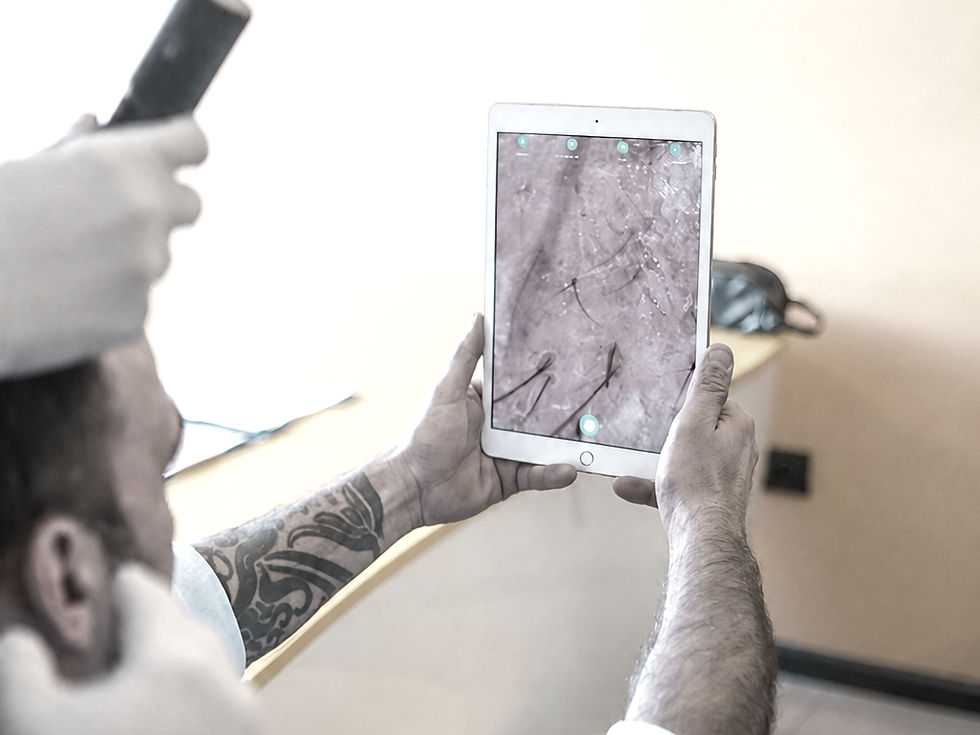
The hair transplant market is flooded with acronyms and marketing buzzwords. International patients often spend countless hours online trying to decipher whether traditional FUE (Follicular Unit Extraction), Sapphire FUE, or DHI (Direct Hair Implantation) is the ultimate, superior solution.
The clinical reality is simple: there is no universally "perfect" technique. These methods are not magic wands; they are simply advanced surgical instruments. And an instrument, no matter how refined, is only as effective as the medical artist wielding it. To make an informed decision, it is essential to understand the basic mechanics, the evolution of each approach, and how they complement one another:
Traditional FUE (Follicular Unit Extraction): * The Mechanism: FUE fundamentally refers to the extraction method—removing individual follicular units one by one from the donor area, avoiding the linear scar associated with older strip surgeries. During the implantation phase, tiny recipient sites are created using standard steel micro-blades or needles, and the grafts are gently inserted using forceps.
The Clinical Profile: While traditional FUE revolutionized hair restoration and remains a solid foundational technique, standard steel blades can gradually lose their pristine edge during a long procedure, which can lead to slightly more tissue trauma compared to modern material advancements.
Advanced Sapphire FUE: * The Mechanism: This elevates the traditional FUE process by replacing standard steel with ultra-sharp, synthetic sapphire blades to create the recipient micro-channels.
The Clinical Profile: Sapphire is significantly harder than steel and maintains its microscopic sharpness throughout the entire surgery. This allows for incredibly precise, V-shaped incisions that minimize tissue trauma, reduce bleeding, and promote faster recovery. It is highly efficient for larger restorative sessions, allowing the surgeon to safely rebuild dense structural areas while carefully preserving the scalp's vascular health.
DHI (Direct Hair Implantation): * The Mechanism: This technique utilizes a specialized, spring-loaded tool (the Choi Implanter Pen) to simultaneously pierce the skin and implant the follicle in a single, fluid motion, bypassing the need to create pre-made incisions.
The Clinical Profile: DHI provides the surgeon with exceptional, real-time control over the exact angle, direction, and depth of the graft. Because the follicles are loaded directly into the protective needle of the pen, it minimizes the physical handling of the delicate tissue. It is often the preferred modality when adding density between existing native hairs, frequently allowing the patient to keep the recipient area unshaven.
The Hybrid Approach: * The Mechanism: The strategic, concurrent use of both Sapphire FUE and DHI during a single surgical session, tailored to different zones of the scalp.
The Clinical Profile: This represents the highest tier of bespoke restoration. A clinical team may utilize Sapphire FUE to efficiently and safely rebuild the dense core of the mid-scalp or crown, while seamlessly transitioning to DHI to meticulously sculpt the delicate micro-irregularities of the frontal hairline or to weave grafts into areas of thinning native hair.
So, what is the best hair transplant technique? The one that your specific biology dictates. At Eva Estetica, your architectural blueprint—your hair caliber, your donor characteristics, the extent of your native hair, and the transition zones required—drives the selection of the technique. The tool must serve the clinical vision; the tool should never dictate the outcome.
The Art: Orchestrating the "Fuzz to Field" Transition

If you examine the hairline of a person who has never experienced hair loss, you will not find a sudden, dense wall of hair. Nature builds in gentle gradients. It begins with microscopic, almost invisible vellus hairs, gradually transitioning to fine, single-strand terminal hairs, before finally thickening into the dense "field" of multi-hair follicular units.
We call this the "Fuzz to Field" transition. Recreating this delicate gradient is where the true art of the procedure lives. To achieve the completely undetectable results that define a bespoke hair transplant Istanbul experience, our clinical designers meticulously manipulate three critical variables:
Meticulous Graft Distribution: Under high-magnification microscopes, our technicians audit and isolate the absolute finest, softest single-hair grafts. These are the only grafts permitted at the very front leading edge of the hairline. Placing a uniform, "high density" wall of thick, multi-hair grafts at the front will instantly ruin the illusion and create a harsh, artificial boundary.
Angle and Direction (The Vector of Growth): Every single follicle must be implanted to perfectly match the vector of the native hair surrounding it. In the frontal hairline, hair naturally tilts forward at a sharp 15 to 30-degree angle. If a surgeon implants a graft completely perpendicular to the scalp, it will stand straight up, creating a rigid, pluggy appearance that catches the light unnaturally.
Controlled Micro-Irregularity: The human eye is highly trained to spot artificial patterns. Perfect symmetry looks inherently fake. To combat this, we introduce microscopic irregularities—tiny anatomical peaks, subtle valleys, and staggered spacing—to mimic the beautifully random, asymmetric clustering found in nature.
The Science: Biological Preservation in High-End Hair Restoration

The artistry of the recipient area is fundamentally worthless if the science of the donor area is compromised.
Think of the donor area at the back and sides of your head—the occipital and parietal regions—as a finite, non-renewable biological bank account. It is strategically precious. Because extracted follicles do not grow back in the donor zone, the objective is to thin this area so systematically that the overall reduction in density remains entirely imperceptible.
Driven by aggressive marketing and the allure of single-day "mega-sessions," many commercial clinics frequently over-harvest this area, extracting thousands of grafts indiscriminately to pack the frontal hairline. This reckless depletion causes severe tissue trauma and leaves the back of the head looking moth-eaten, permanently scarred, and artificially thinned.
True high-end hair restoration demands absolute, ethical donor stewardship. It requires viewing the scalp not as an unlimited resource, but as a delicate ecosystem with strict vascular limits. The science of extraction at Eva Estetica follows strict, non-negotiable medical principles designed to protect your physiological reserves:
Mathematical Micro-Distribution: We do not concentrate extractions in one small, localized area. We spread the harvesting evenly across the entire safe donor field, utilizing specific mathematical extraction ratios—often extracting no more than one out of every four or five adjacent follicular units. This calculated dispersal, combined with the use of custom, ultra-fine extraction punches, ensures that the remaining native hair effortlessly camouflages the extraction sites, resulting in zero visible thinning to the naked eye.
Conservative Density Limits and Vascular Respect: We microscopically evaluate your baseline donor density to calculate the exact number of grafts that can be safely removed per square centimeter based on your unique follicular grouping and hair caliber. If a patient requires a massive transformation (such as a Norwood 5 to 7 classification), we will ethically mandate a staged approach. By dividing the restoration into two separate surgeries spaced twelve months apart, we respect the scalp's blood supply, maximize the survival rate of the newly implanted grafts, and prevent the irreversible damage associated with aggressive, single-day extractions.
Preserving the Visual Vocabulary: The ultimate hallmark of elite surgical extraction is a donor zone that remains cosmetically flawless, even when worn with a short haircut. By actively protecting your donor integrity today, we ensure that if your native, non-transplanted hair continues to thin as you age over the next decade, your biological bank account is not bankrupt. You will retain the vital follicular reserves required for any future aesthetic refinements or corrective procedures.
Deep Dive: Navigating an international healthcare market heavily saturated with aggressive commercial marketing requires a sharp understanding of how high-volume facilities cut corners at the expense of your finite biological health. To equip yourself with the critical knowledge needed to spot these structural red flags—especially donor over-harvesting—before booking your trip, read our protective guide: Avoiding the Pitfalls: Systemic Medical Tourism Mistakes in Hair Transplantation
The Art: Architecture on a Human Scale

A hairline is architecture on a human scale. Every millimeter of height, every degree of temporal recession, and every subtle contour contributes heavily to the perceived youth and proportionality of the face.
Medically, the placement of the anterior hairline is guided by underlying facial anatomy. A primary consideration for a safe, natural design is the uppermost boundary of the frontalis muscle—the muscle responsible for raising your eyebrows. Implanting grafts over this active muscle tissue can create an unnatural result; doing so often creates a static line that wrinkles awkwardly during facial expression and can readily signal a surgical intervention.
The final layer of surgical artistry involves designing for the dimension of time and biological progression. Because transplanted follicular units largely retain their genetic resistance to Dihydrotestosterone (DHT), they are considered permanent. However, your surrounding native hair often remains susceptible to future miniaturization. An aggressively low, perfectly straight hairline might temporarily suit a twenty-year-old, but as the underlying bone structure matures and native hair potentially recedes further, it can look profoundly incongruous—and obviously surgical—on that same man when he is fifty.
At Eva Estetica, we do not design solely for the age you were; we design for the age you are, and the age you will gracefully become. To achieve this, our medical architects utilize anatomical landmarks to thoughtfully restore facial balance:
The Classical Rule of Thirds: We mathematically evaluate the vertical proportions of your face, measuring the distances from the chin (menton) to the base of the nose (subnasale), the nose to the brow (glabella), and the brow to the proposed hairline (trichion). True aesthetic harmony is typically achieved when the upper third closely mirrors the lower thirds, rather than dominating the forehead.
The Fronto-Temporal Angle: The "peaks" where the frontal hairline meets the temples are critical to a mature, distinguished appearance. We intentionally incorporate slight, natural recessions in these temporal peaks. Closing these angles completely to create a rounded, juvenile hairline can significantly disrupt masculine facial framing.
Follicular Caliber Grading: To transition smoothly into the temporal regions, our clinical team carefully isolates the finest, softest single-hair grafts to mimic the natural, vellus-like quality of a native hairline. This grading helps ensure the borders of the restoration remain virtually undetectable, even under harsh lighting.
This intersection of anatomical boundaries and artistic foresight is the distinct difference between a result that looks "surgically corrected" and one that looks distinguished, handsome, structurally sound, and authentically matched to your character across your lifespan.
The Istanbul Factor: Where Craftsmanship Meets Infrastructure

Over the past decade, Istanbul has become one of the world’s most important destinations for hair restoration. Patients from Europe, the Middle East, and beyond are drawn here by the combination of advanced medical infrastructure, international accessibility, and a mature aesthetic market.
But geography alone does not create excellence. A city can offer convenience without offering refinement. In hair restoration, the difference lies in how a clinic uses that environment. Some operate on a high-volume model built around speed and quantity, where treatment can become transactional and design decisions are repeated too mechanically. Others take a very different approach, using Istanbul’s infrastructure to support a more deliberate, individualized, and medically disciplined experience.
At Eva Estetica, we value the advantages Istanbul offers, but we do not confuse scale with quality. Our focus is on unhurried planning, careful donor stewardship, and hairline design that is tailored to the individual rather than shaped by a template. The goal is not to promise unlimited grafts or dramatic spectacle. It is to protect the donor area, respect the biology of the scalp, and create a result that feels coherent over time.
For the international patient, this means logistics should feel seamless, but the medical process itself should remain highly controlled. Travel, transfers, and accommodation may be handled with ease, but the clinical work should still reflect restraint, precision, and personal attention.
True restoration is not loud. It is the kind of result that allows the face to appear balanced and natural without drawing attention to the procedure itself. The best outcome is one that feels integrated from the start and continues to look right as the patient moves through daily life.
Conclusion: Securing Your Biological and Aesthetic Legacy
Choosing to restore your hair is a deeply personal investment in your future. It requires entrusting a clinical team with the permanent framing of your face and the careful stewardship of your finite donor reserves. Rather than settling for a standardized approach, seeking a bespoke, design-first philosophy ensures that your unique biology and facial architecture are fully respected.
At Eva Estetica, we measure our success by the seamless, undetectable integration of every follicle we meticulously place. By honoring the delicate balance between rigorous surgical science and nuanced architectural artistry, we help ensure your restoration matures gracefully alongside you, looking distinguished at every stage of your life.
Your journey to Istanbul should culminate in a result that feels profoundly natural, structurally sound, and inherently yours. We invite you to experience the dedicated focus, unhurried pace, and tailored care of true, private medical craftsmanship.
Frequently Asked Questions: The Bespoke Hair Transplant Experience
1. What makes a hair transplant "bespoke" compared to a standard procedure?
A standard, mass-market hair transplant relies on generic templates, maximizing graft counts, and rushing patients through an assembly-line environment. A bespoke procedure is a highly individualized medical intervention. It discards templates entirely, focusing instead on your unique facial bone structure, hair caliber, and long-term aging trajectory. Every element—from the microscopic auditing of your donor area to the strategic angle of every implanted follicle—is custom-designed to create an undetectable, naturally integrated result.
2. Which is the best technique: Sapphire FUE or DHI?
There is no universally "best" technique; there is only the right surgical instrument for your specific anatomical needs. Sapphire FUE is exceptionally precise and efficient for rebuilding dense core areas while minimizing tissue trauma, whereas DHI offers unparalleled real-time control for implanting between existing native hairs without shaving. At Eva Estetica, our medical board often utilizes a hybrid approach, leveraging the strengths of both modalities during a single session to execute your specific architectural blueprint perfectly.
3. Why shouldn't I just ask for the maximum number of grafts possible?
Your donor area is a finite, non-renewable biological bank account. Extracting the "maximum" number of grafts in a single, aggressive session frequently leads to over-harvesting, which leaves the back of the head permanently scarred and artificially thinned. A bespoke clinical team prioritizes ethical donor stewardship, extracting only what is medically safe. If a massive transformation is needed, we ethically mandate a staged approach to protect your vascular health and preserve grafts for any future needs.
4. How do you design a hairline that looks completely natural?
Nature does not create harsh, dense walls of hair. A truly natural hairline relies on a delicate gradient we call the "Fuzz to Field" transition. Our clinical designers meticulously isolate the softest, finest single-hair grafts to place at the very front leading edge. We then match the exact angle and forward-leaning vector of your native growth, intentionally introducing microscopic irregularities and subtle temporal recessions to mimic the beautifully random patterns found in nature.
5. Will my hair transplant still look natural as I get older?
Yes, provided it is designed with the dimension of time in mind. An aggressively low, straight hairline might look fine in your twenties but will appear incongruous and obviously surgical in your fifties. We utilize anatomical landmarks, such as the classical "Rule of Thirds" and the upper boundary of the frontalis muscle, to design an age-appropriate hairline that matures gracefully alongside your evolving facial structure.
6. What exactly happens during an Eva Estetica remote consultation?
A true consultation is a rigorous medical diagnosis, not a high-pressure sales pitch. Before any surgical commitment is made, our clinical team conducts a microscopic audit of your donor reserves, maps your facial proportions, and analyzes your long-term hair loss trajectory. We openly discuss your anatomical limits and design a comprehensive medical stabilization plan to protect your native hair, ensuring complete clinical transparency from day one.
7. Do you use the same hairline shape for every patient?
Absolutely not. Using generic templates is a hallmark of commercial hair mills and is exactly what causes artificial, "cookie-cutter" results. At Eva Estetica, your hairline is mathematically mapped to your unique facial geometry. We respect your ethnicity, your age, and the natural contours of your bone structure to ensure the final result frames your face authentically and individually.
8. Why are single-hair grafts so critical to the procedure?
Follicular units naturally grow in groupings of one, two, three, or four hairs. If multi-hair grafts are implanted at the very front of the hairline, it immediately creates a harsh, "pluggy" appearance. Single-hair grafts are essential because they mimic the fine, vellus-like hairs that naturally border a human face. Careful microscopic auditing is required to isolate these specific grafts to ensure the leading edge of your restoration is entirely undetectable.
9. Can a bespoke clinic fix a botched hair transplant from a commercial center?
Corrective surgery is highly complex, as it often requires extracting misangled grafts, camouflaging unnatural hairlines, and working with severely depleted donor reserves. While our specialized medical team frequently performs corrective and repair surgeries, the viability depends entirely on how much of your donor "bank account" the previous clinic left intact.
10. Why should I choose a bespoke clinic in Istanbul over a standard all-inclusive package?
While Istanbul is the global epicenter for hair restoration, the vast majority of its clinics operate on a high-volume, low-cost model where surgeries are delegated to rotating technicians. Choosing Eva Estetica means pairing the seamless logistical excellence of Istanbul's medical infrastructure with a fiercely protected, private clinical environment. We limit our daily procedures to ensure our medical specialists have the unhurried focus required to execute your surgery with uncompromising artistry and biological safety.


Comments