How Ethnicity Influences Your Hair Transplant: A Clinical Guide


If you have been researching hair restoration, you may have noticed a common trend across the industry: the human scalp is often treated as a uniform, blank canvas. It can easily feel as though there is a single, "standard" hair transplant procedure applied to every patient, using the exact same extraction tools and hairline designs regardless of who is sitting in the surgical chair.
While standardizing a procedure might seem like a straightforward approach, true medical excellence requires a much deeper level of personalization. At Eva Estetica, we approach your restoration differently because we understand that your scalp is a highly complex, living ecosystem.
Beneath the surface of the skin, the microscopic shape, depth, and grouping of your hair follicles are entirely unique to you, heavily dictated by your genetic blueprint. A surgical technique that creates a flawless, natural result for one patient could easily look artificial—or even cause unnecessary tissue trauma—on another. Acknowledging and adapting to these natural differences is what separates a generic procedure from a masterfully engineered restoration.
Understanding exactly how your ethnicity influences your hair transplant planning is one of the most critical steps in achieving a safe, undetectable, and permanent outcome. Here is a clinical breakdown of why your unique background fundamentally changes the way we design your surgical architecture.
"How ethnicity influences your hair transplant comes down to three genetic variables: hair caliber, follicle geometry, and natural donor density. Because Afro-textured hair curls deeply beneath the skin and Asian hair grows exceptionally thick and straight, a master surgeon must completely customize their extraction tools, hairline design, and implantation angles to your specific ethnic background to ensure a safe, natural, and undetectable result."
Table of Contents: How Ethnicity Influences Your Hair Transplant
The Biology of Ethnic Hair Types

Elite hair restoration does not rely on guesswork or generalized surgical templates. Before a single graft is extracted, a comprehensive microscopic digital trichoscopy audit must be conducted to measure three distinct genetic variables. While broad demographic tendencies exist, these baselines vary significantly across individuals, specific scalp regions, and measurement techniques. Mastering these individual measurements is what separates an average transplant from a truly undetectable, permanent restoration:
Hair Caliber (The Opacity Factor): This is the microscopic diameter, or cross-sectional area, of the individual hair shaft. It is a powerful variable in creating visual density. While calibers vary widely from person to person, comparative literature reviews note population tendencies—for example, patients of East Asian descent frequently present with a thicker average hair caliber compared to those of Caucasian descent. Because thicker hair covers more surface area, it blocks more light from hitting the scalp. This individual measurement helps dictate how tightly grafts must be packed in the recipient area, ensuring maximum coverage without creating a harsh or artificial appearance.
Follicle Geometry (The Subdermal Mechanics): What is visible above the scalp is only half the story. The physical shape and trajectory of the hair root deep beneath the skin must also be analyzed. Standard FUE planning is highly individualized: punch size, angle, and depth must be adjusted to the follicle’s specific exit path. While many Caucasian and Middle Eastern patients present with relatively straight subdermal growth, Afro-textured hair frequently curves beneath the skin. To safely extract these follicles and reduce the risk of transection (severing the root), surgeons may utilize specialized curved techniques or uniquely flared punches to carefully follow the follicular curvature.
Donor Density (The Biological Bank Account): This is the calculation of exactly how many hairs naturally occur per square centimeter in the donor area (the back and sides of the head). Rather than fixed constants, medical literature provides summarized averages across populations: Caucasian hair averages roughly 226 ± 73 hairs/cm², Asian hair averages 175 ± 54 hairs/cm², and African hair averages 161 ± 50 hairs/cm². Because these are merely statistical summaries, calculating your exact, personalized density is vital. It ensures that the surgeon extracts exactly what is needed to rebuild the hairline while aggressively protecting your finite donor reserve for the future.
Because these variables dictate exactly how light interacts with the scalp and how tissue will respond to surgery, a hair transplant can never be a standardized procedure. At Eva Estetica, this biological science forms the foundation of every operation. The entire surgical strategy is confidently adapted not just to your demographic, but to the unique physics of your individual genetic blueprint.
Deep Dive: Want to know how these biological variables dictate your exact surgical math? Explore our masterclass on: How Many Grafts Do I Need for a Hair Transplant?
Afro-Textured Hair: The "C-Curve" Challenge

Performing Follicular Unit Extraction (FUE) on patients of African descent often requires a highly specialized surgical skill set and is widely considered one of the most technically demanding procedures in hair restoration.
The Subdermal Biology: Unlike straight hair, Afro-textured hair often features a follicle that curves into a "C" shape deep underneath the skin, rather than just curling above the scalp.
The Surgical Adjustment: Because of this subdermal curvature, using a standard, straight, narrow extraction punch can significantly increase the risk of severing the root beneath the skin—a surgical complication known as transection. To safely extract these follicles while protecting the living tissue, the surgeon may utilize specialized, slightly wider punches and dynamically adjust the angle of extraction to carefully follow the follicle’s natural path.
The Visual Advantage: While extraction can be technically challenging, tightly curled or kinky hair often provides a distinct cosmetic advantage during implantation. Because the curls naturally expand and block light from hitting the scalp, they generally offer superior surface coverage compared to straight hair of a comparable thickness. As a result, achieving a high level of apparent density and visual fullness may sometimes require fewer grafts than it would for a patient with straight hair.
Deep Dive: Extracting curved follicles requires absolute mastery over surgical instruments. Discover how we adapt our extraction technology to your unique biology: FUE, DHI, and Sapphire FUE: Different Tools, One Philosophy
Asian Hair: The Precision and Caliber Challenge

Patients of East Asian and Southeast Asian descent present a distinct set of biological variables that demand highly precise surgical planning and specialized placement techniques.
The Subdermal Biology: Clinical reviews of Asian hair generally describe it as straight with a large cross-sectional diameter (high caliber). While comparative literature often points to lower average donor densities for this demographic compared to Caucasian averages, recent systematic reviews confirm that hair-density baselines vary significantly by specific scalp region, measurement technique, and the individual patient. Therefore, personalized measurement of your exact donor supply is essential, rather than relying on broad population statistics.
The Surgical Adjustment: Because the hair shafts are frequently thick, dark, and straight—often creating a high contrast against lighter scalp tones—implantation angle and depth are critical planning issues. If thick hair is implanted at an incorrect trajectory, the follicles can easily stand straight up, which may result in a harsh or unnatural appearance.
The Visual Advantage: The generally larger diameter of the hair means each individual graft carries immense visual weight and coverage potential. To capitalize on this while maintaining a flawless aesthetic, a surgeon must meticulously select ultra-fine, single-hair grafts for the very front of the hairline to create a soft, graduated transition. The thicker, multi-hair grafts are then strategically placed further back in the recipient zone to build substantial visual density and opacity.
Caucasian and Middle Eastern Hair: The Blending and Density Challenge


Patients of Caucasian and Middle Eastern descent often exhibit the widest variance in hair texture, ranging from fine and pin-straight to coarse and wavy.
The Subdermal Biology: While some comparative clinical studies report a higher average follicular density in Caucasian groups compared to Asian or African demographics, there is massive overlap between individuals. As recent systematic reviews emphasize, baseline hair density varies heavily by specific scalp region, measurement technique, and individual genetics. Follicular units naturally occur in small groupings of 1 to 4 hairs, but a surgeon can never assume a vast donor supply based on a demographic formula; the donor capacity must be directly measured in every single patient.
The Surgical Adjustment: The primary clinical challenge with this demographic is often blending and volume management. Graft planning is entirely about matching those naturally occurring follicular groupings to the patient’s precisely measured donor reserve and recipient needs. When placing grafts among existing native hair on the top of the scalp, the surgeon must make incredibly precise incisions to match the natural density gradients without causing surgical trauma or temporary "shock loss" to the surrounding healthy hairs.
Designing the Hairline: Respecting Facial Geometry

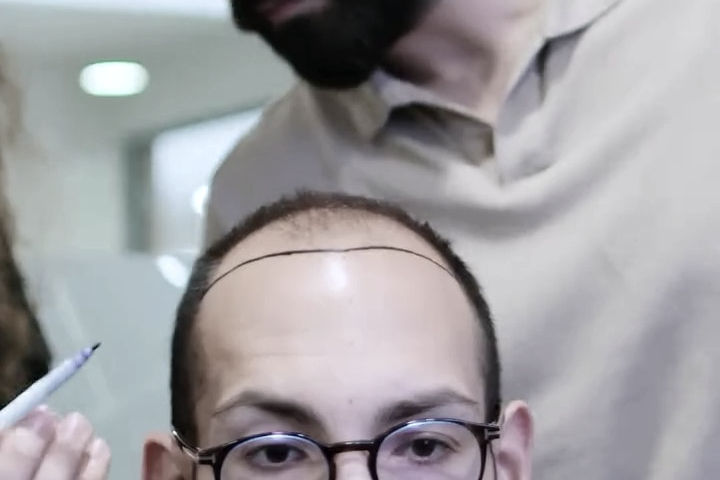
A hair transplant is not simply the act of replacing lost follicles; it is an intricate exercise in facial framing. The hairline serves as the upper boundary of the face, heavily influencing the perception of overall proportions. To guide this design, surgeons often reference aesthetic frameworks like the "Rule of Thirds" (a classical guideline dividing the face from the hairline to the brow, the brow to the nasal base, and the nasal base to the chin). However, facial morphometric studies show that the upper facial third is a flexible aesthetic variable, not a strict mathematical law. These guidelines must always be fluidly adapted to the individual.
While medical literature recognizes broad structural tendencies across African, Asian, and Caucasian profiles, these should never be treated as rigid, universal face-shape formulas. Hair characteristics, bone structure, and facial proportions vary immensely within demographic groups. The only accurate clinical approach is to measure the individual patient's unique geometry rather than assuming a fixed template.
That said, understanding common demographic patterns helps a surgeon anticipate appropriate aesthetic boundaries during the planning phase:
African-Type Hairlines: When evaluating patients of African descent, clinicians often note a population tendency toward straighter, lower hairline alignments with sharper, more defined temporal peaks. When a patient’s natural bone structure supports this specific geometry, recreating it requires precise, linear graft placement to ensure the result looks authentically harmonious with their unique facial features.
Caucasian-Type Hairlines: Many Caucasian profiles naturally present with an oval or slightly receded "mature" shape (a soft 'U' or 'V' curve), even in individuals without genetic hair loss. Because of this common structural tendency, attempting to rebuild a completely flat or aggressively low hairline often disrupts the patient's natural facial ratios, resulting in a design that can look artificial or fail to age gracefully.
Asian-Type Hairlines: Morphometric studies of Asian facial structures frequently note a broader frontal plane and a wider bi-temporal distance (the width across the forehead between the temples). When a patient presents with this geometry, the surgical design must accommodate the width carefully. The hairline is often crafted with a subtle curve that respects the broader forehead, ensuring the transition zones blend seamlessly into the lateral humps (the sides of the head) without making the upper face appear unnaturally pinched or narrow.
Scalp Contrast: The Optical Physics of Visual Density

Chiaroscuro—the artistic manipulation of light and shadow to create the illusion of three-dimensional depth and volume. In elite hair restoration, a master surgeon applies this exact same principle to the scalp.
Absolute density (the mathematical number of hairs per square centimeter) is distinctly different from apparent density (how full the hair actually looks to the human eye). Apparent density is fundamentally an optical illusion created by blocking ambient light. Just as classical artists used dark pigments to absorb light and create visual weight, a surgeon uses precise graft placement to absorb light and prevent it from reflecting off the scalp. How effectively that light is managed depends heavily on Hair-to-Scalp Color Contrast (HSCC)—a critical optical variable tied to the melanin distribution in both your epidermis and your hair cortex.
When light hits the top of the head, the hair canopy absorbs a portion of it. The remaining light penetrates through to the scalp, where it is either absorbed by epidermal melanin or reflected back to the observer's eye. Managing this reflection is a core component of surgical architecture.
Low-Contrast Profiles (The Blending Effect): This profile occurs when the melanin concentration in the skin closely matches the melanin concentration in the hair. Common examples include patients with dark skin and dark hair (high eumelanin in both tissues), or pale skin and light blonde hair (low melanin in both).
The Science: Because the scalp and hair reflect light at similar wavelengths, the visual boundary between the hair shaft and the skin is blurred. The scalp acts as a light-absorbent base rather than a reflective background.
The Surgical Application: Due to this favorable optical blending, the threshold required to achieve apparent full coverage is relatively lower. A surgeon can often create the illusion of complete opacity with a comparatively conservative graft placement. This optical advantage allows the surgical team to safely preserve a larger portion of the patient's finite donor reserve for the future without compromising the visual result.
High-Contrast Profiles (The Reflection Challenge): This profile presents when there is a stark difference in melanin concentration, most commonly seen in patients with very pale skin (low epidermal melanin) and dark, coarse hair (high cortical eumelanin).
The Science: A pale scalp has a high albedo (reflectivity). When light penetrates the dark hair canopy, it hits the pale scalp and reflects brightly back through the dark hairs. The human eye detects this stark contrast immediately, perceiving the light patches as thinning or baldness, even if the absolute number of hairs in that area is biologically normal.
The Surgical Application: To overcome this mirror-like reflection, the surgical team must construct a denser physical barrier to block light transmission, packing grafts more tightly in the recipient area. The surgeon must also utilize highly precise implantation angles to create a "shingling" effect, ensuring the hair shafts layer perfectly over one another to completely block the scalp from view.
A Practical Example You Can Test at Home Have you ever noticed that your hair might look perfectly full in your dimly lit bathroom mirror, but when you step into an elevator with harsh overhead downlighting—or look at a photo of yourself taken in direct sunlight—your hair suddenly appears much thinner?
This is scalp contrast in action. The intense overhead light penetrates your hair canopy and hits your scalp. If you have a pale scalp and dark hair, that light reflects back into the mirror or the camera lens. You haven't actually lost more hair in the elevator; the intense light has simply overpowered your hair's ability to block the reflection. This is why elite surgical planning aims to create a density pattern and hairline transition that remains natural and convincing in real-world lighting environments, rather than just in flattering photos.
Ultimately, there are no fixed mathematical formulas or universal density standards in elite hair restoration. The exact number of grafts required for a convincing, natural result is shaped by a complex synthesis of your scalp contrast, hair caliber, natural curl, and baseline donor capacity—all of which must be meticulously and individually measured during your clinical evaluation.
Why Ethnic Considerations Matter in Surgical Design

Incorporating demographic tendencies into surgical planning is vital because hair restoration is a permanent facial-framing procedure. However, these ethnic considerations must serve as planning heuristics rather than rigid templates. While different hair types and underlying bone structures frequently require different design choices, a master surgeon must always adapt the hairline and density plan to the individual face, rather than forcing a single demographic formula.
When a clinic applies a generalized approach, it typically results in two critical clinical failures:
Structural Mismatches: The human eye is highly attuned to facial symmetry and natural proportions. While aesthetic frameworks like the "Rule of Thirds" are excellent starting guides, the final design must be individualized. If a surgeon attempts to force a standardized, softly curved hairline template onto a patient whose unique bone structure naturally supports a straighter, more defined framing, the result will feel artificial and disrupt the intuitive way we perceive facial balance.
Textural and Directional Clashes: If a surgeon fails to respect the patient's specific follicle geometry during extraction, or fails to match the precise exit angle, hair caliber, curl pattern, and scalp contrast during implantation, the transplanted zone will behave differently than the rest of the scalp. It will grow in a jarring direction or reflect light incorrectly, making the transplanted area look like a separate, isolated entity rather than a continuous, natural progression of hair.
The ultimate goal of clinical hair restoration is absolute undetectability. Achieving this requires moving far beyond generic, assembly-line procedures. It demands a highly personalized architectural blueprint that respects the patient's measured biology both above and below the skin.
By meticulously tailoring extraction protocols to safeguard your specific follicle geometry, and adapting implantation techniques to match your natural hair caliber and scalp contrast, the surgical team ensures a seamless integration. This deep biological respect not only provides an enduring, permanent restoration, but perfectly complements your natural features and individual identity as you age.
The Limitations of a "One-Size-Fits-All" Approach

The Limitations of a "One-Size-Fits-All" Approach
When high-volume commercial centers apply a universal, standardized procedure to every patient, they often overlook the nuanced biological variables required for a seamless and safe result.
Applying a single technique across all demographics frequently leads to clinical complications. For instance, if a standard, straight extraction punch is used universally without adjusting for the subdermal curvature often found in Afro-textured hair, there is a significantly higher risk of transection (damaging the root during extraction). Similarly, attempting to pack thick, high-caliber hair using the same extreme density targets required for fine hair can risk compromising the scalp's vascular supply and often results in an unnaturally harsh appearance.
Beyond extraction mechanics and density targets, a standardized approach frequently fails in long-term aesthetic design. Many commercial clinics aggressively recreate a perfectly straight, juvenile hairline that will inevitably look artificial as the patient ages. In contrast, an elite surgical blueprint requires analyzing references of your younger hairline while gracefully adapting it to your current, mature facial geometry. Furthermore, because hair loss is a progressive condition, we actively plan for your future recession, ensuring the transplanted zone remains seamlessly integrated with your native hair decades from now. To achieve absolute naturalness, the surgeon must also intentionally craft micro-irregularities into the leading edge of the hairline—because a biological hairline is never a flawless, solid line—customizing this macro and micro architecture to fit your specific case.
True clinical excellence relies on biological respect. At Eva Estetica, our surgical blueprints are inherently bespoke. By conducting a microscopic digital trichoscopy audit during your consultation, we precisely evaluate your individual hair caliber, follicle geometry, and baseline density. Whether you present with coarse straight hair, fine wavy hair, or tight subdermal curls, your surgical plan is engineered specifically for your unique physiological profile rather than a generalized template.
Deep Dive: True restoration focuses on age-appropriate, lifelong planning. Learn the red flags to watch out for: What to Look for Before Trusting a Hair Transplant Clinic
Conclusion: Your Genetic Blueprint is Your Surgical Blueprint
A truly successful hair transplant is one that no one else can see. Achieving that level of absolute undetectability requires a profound respect for the biology you were born with. While understanding your ethnic background provides a surgical team with essential clinical clues regarding your likely hair caliber, subdermal curvature, and natural scalp contrast, it is the precise, microscopic measurement of your individual scalp that must ultimately dictate your final surgical plan.
Undergoing a hair transplant should never mean conforming to a clinic's standard technique; rather, the surgical technique must be meticulously adapted to you. We do not view hair restoration as a simple, high-volume process of extracting and implanting grafts. It is a permanent, lifelong investment in your facial harmony, executed with mathematical precision and artistic care.
If you are ready to move beyond generalized, standardized procedures and discover exactly how your unique hair characteristics will shape your optimal result, we invite you to take the next step. Contact the surgical team at Eva Estetica today to schedule your comprehensive digital trichoscopy audit, and let us design a bespoke architectural blueprint engineered specifically for you.
Frequently Asked Questions: Ethnicity & Hair Transplants
1. Do hair transplants work on African American and Afro-textured hair?
Yes, but it requires highly specialized surgical techniques. Because Afro-textured hair curls in a "C" shape beneath the skin, standard FUE extraction punches can easily sever the root. An elite surgeon uses customized, slightly wider punches and adjusts the extraction angle to safely harvest the grafts, resulting in excellent, dense coverage.
2. Why is Asian hair transplant planning different from Caucasian hair?
Asian hair is typically thicker (higher caliber) and perfectly straight, but it grows at a lower density per square centimeter compared to Caucasian hair. Because the hair is so thick, incorrect implantation angles can quickly look unnatural or "pluggy." Surgeons must use ultra-precise single-hair grafts at the front to ensure a soft, natural transition.
3. Does skin color and hair color contrast affect a hair transplant?
Yes. The visual density of a hair transplant relies heavily on scalp contrast. Patients with low contrast (e.g., dark skin with dark hair, or pale skin with light hair) naturally block light better, often requiring fewer grafts to achieve the illusion of fullness. High contrast (e.g., pale skin with very dark hair) requires tighter graft packing to prevent the scalp from showing.
4. What is the best hair transplant method for curly hair?
Both FUE (Follicular Unit Extraction) and DHI (Direct Hair Implantation) are highly effective for curly hair, provided the surgeon has specific expertise in ethnic extraction protocols. The "best" method depends entirely on your unique follicle geometry, hair caliber, and whether you are rebuilding a hairline or adding density between existing native hairs.
5. Will my transplanted hair change its natural texture?
No. Hair follicles are genetically programmed. When a graft is relocated from the donor zone on the back of your head to the balding areas, it retains its original DNA, caliber, and curl pattern. It will grow and behave exactly like your native ethnic hair.
6. Can a hair transplant restore a naturally straight ethnic hairline?
Yes. A master surgeon designs your hairline based on your specific facial bone structure and ethnic geometry. For patients of African descent, this often means a flatter, lower alignment with sharper temporal peaks. In contrast, Caucasian and Middle Eastern patients usually require a softly curved, "mature" recession for the most natural, age-appropriate look.
7. Is the risk of scarring higher for Afro-textured hair transplants?
Patients of African descent can have a statistically higher predisposition to keloid or hypertrophic scarring. However, when FUE is performed correctly using micro-punches and strict medical protocols by an experienced surgical team, the trauma is microscopic, drastically minimizing the risk of visible scarring in the donor area.
8. Do I need more grafts if my hair is naturally straight and fine?
Generally, yes. Fine, straight hair (common in many Caucasian profiles) covers less surface area and blocks less light than thick or highly textured hair. To achieve the illusion of total opacity, a surgeon will often need to transplant a higher mathematical volume of grafts compared to a patient with coarse or curly hair covering the same sized area.
Academic Sources and Clinical Literature
The surgical philosophies and biological metrics discussed in this guide are deeply rooted in peer-reviewed medical literature, anatomical studies, and systematic reviews. For further clinical reading on the science of ethnic hair restoration, please consult the following foundational texts:
1. Ethnic Considerations in Hair Restoration Surgery Epstein J, Bared A, Kuka G. Facial Plastic Surgery Clinics of North America (2014). A comprehensive clinical overview of how Follicular Unit Extraction (FUE) and hairline advancement surgeries must be specifically adapted to Asian, African, and Caucasian anatomical structures. View on PubMed (PMID: 25049126)
2. Establishing Baselines of Hair Density Measurements: Variations Across Ethnicity, Scalp Region, and Measurement Techniques: A Systematic Review Losicco K, et al. Journal of the American Academy of Dermatology (2023). A pivotal recent systematic review confirming that absolute hair density varies significantly not just by demographic, but by individual genetics and measurement techniques, underscoring the need for individualized preoperative trichoscopy. View on PubMed (PMID: 37604232)
3. Diversity of Hair Growth Profiles: A Global Perspective Loussouarn G, et al. International Journal of Dermatology (2016). A detailed anatomical study defining the clinical variances in hair shaft caliber (diameter), cross-sectional shape, and growth rates across different global demographics, critical for understanding surgical visual density. View on PubMed (PMID: 26738981)
4. An Analysis of Follicular Punches, Mechanics, and Dynamics in Follicular Unit Extraction (FUE) Cole JP. Facial Plastic Surgery Clinics of North America (2013). An advanced surgical breakdown of subdermal mechanics, explaining why precise punch adjustments and flared extraction techniques are required to minimize transection rates, particularly in curved or complex follicular units. View on PubMed (PMID: 24017983)
5. The "Rule of Thirds" and Facial Morphometrics in Aesthetic Surgery Farkas LG, et al. Plastic and Reconstructive Surgery. The foundational anatomical literature detailing human facial geometry and proportions, explaining why hairline design must be fluidly adapted to underlying bone structure and natural ethnic facial balance rather than applying fixed mathematical templates.
Comments