Hair Transplant Cost in Istanbul: The True Investment in Bespoke Restoration

Updated: May 16

Istanbul has undeniably solidified its position as the global epicenter for hair restoration. Every week, thousands of discerning individuals from London, New York, Sydney, and Berlin travel to this historic city with a single goal: to reclaim the frame of their face. However, as the industry has expanded, so too has the overwhelming spectrum of choices, leading to a landscape that can feel chaotic and contradictory.
When stepping into this world, it is entirely logical that your research begins with a search for numbers. A simple inquiry into the Hair Transplant Cost in Istanbul will yield thousands of results, ranging from alarmingly cheap "all-inclusive tourism packages" to highly exclusive, bespoke medical fees. For the intelligent patient, this massive disparity is understandably confusing. How can two procedures, seemingly utilizing the exact same surgical acronyms, carry such vastly different financial requirements?
At Eva Estetica, we believe in absolute transparency. The disparity in price reflects a profound, fundamental divide in medical philosophy. On one side of the spectrum is the mass-market, high-volume industry, which views hair restoration as a commercial transaction. On the other is boutique clinical architecture, which views it as a lifelong medical partnership. To make an informed decision about your restoration, you must strip away the marketing, move beyond the final price tag, and understand the exact economic, biological, and architectural reality of what you are investing in.
Table of Contents: The Integrity of Your Investment
The True Metric: Looking Beyond the "Hair Transplant Cost Istanbul"

It is entirely logical that your research begins here. When stepping into unfamiliar territory, the mind naturally seeks a quantifiable metric to anchor itself. You search for the hair transplant price Istanbul because numbers provide a baseline an illusion of control in a crowded market.
This is a realistic and necessary approach. However, let us speak directly: while understanding the financial investment is important, it is the wrong metric for defining your success.
The man who focuses solely on finding the lowest price is negotiating with his present anxieties. The man who focuses on clinical quality, biological preservation, and architectural design is securing his future dignity.
When you strip away the marketing, you are not purchasing hair. You are commissioning a permanent alteration to the geometry of your face. If the design is flawed—if the hairline is drawn too straight, or placed too low for your age—the fact that you paid a "good price" will offer you absolutely no comfort when you look in the mirror five years from now.
The true question you must ask yourself is not, "What does this cost?" but rather, "What is the standard of the design I am willing to wear on my face for the rest of my life?"
Once you elevate your focus from the price tag to the preservation of your donor area and the mastery of the design, the correct path forward becomes entirely clear.
Deep Dive: Understanding how a natural result relies on both immediate artistry and long-term planning is the core of our philosophy. For a comprehensive overview of how we design for the future, read our central masterclass:
The The Fallacy of the "Per-Graft" Pricing Model
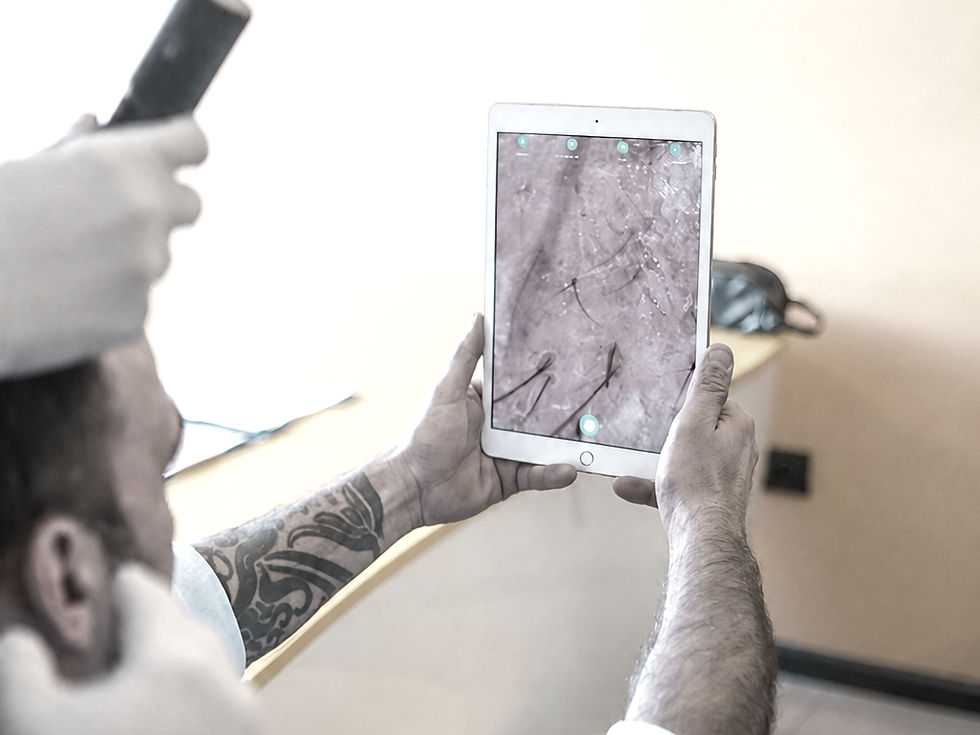
In much of the mass-market industry, hair transplants are treated as a commodity, priced similarly to buying materials for a construction project: you pay a specific monetary amount for every single hair graft extracted and implanted.
At Eva Estetica, we fundamentally reject the per-graft pricing model.
We view it as a concept that deeply contradicts the ethical trust between a clinical architect and a patient. When a clinic charges you by the graft, a dangerous conflict of interest is immediately introduced.
The clinic is financially incentivized to extract as many grafts as possible to increase the final bill. This model preys on the patient’s natural desire for "maximum density."
However, your donor area—the safe zone at the back of your head—is a strictly finite biological resource. If a surgeon over-harvests this area just to hit a high graft count, they will permanently deplete your biological reserve. Instead of selling you biological tissue, an elite clinic charges an architectural fee for the procedure as a whole. By removing the financial incentive tied to graft counts, our clinical architects are free to extract exactly what is required to achieve a flawless, age-appropriate result—not a single graft more.
Demystifying the Tools: FUE, Sapphire, and DHI Pricing Structures

As you navigate the global market, you will encounter a confusing array of acronyms—Standard FUE, Sapphire FUE, and DHI. Often, patients notice that the Hair Transplant Cost in Istanbul fluctuates significantly depending on which of these methods is selected. In many institutions, standard FUE is presented as the foundational option, while Sapphire and DHI are positioned as premium tiers with higher price tags.
In hair restoration, your scalp, your hair caliber, and your native density represent this "terrain." Sapphire blades and DHI Choi Implanters are not simply upgrades; they are entirely different instruments designed to navigate different biological terrains:
Sapphire FUE: Utilizes a precise gemstone blade that creates microscopic, V-shaped channels. It is the optimal tool for creating dense, rapidly healing hairlines on entirely bare skin.
DHI (Direct Hair Implantation): Utilizes a pen-likdevice to implant hair without pre-made incisions. It is the perfect tool for navigating between existing native hairs without damaging their fragile roots, making it ideal for crown thinning.
Anatomy Over Economics
Many clinics structure their pricing around these tools, asking the patient to select their surgical instruments based on their budget.
At Eva Estetica, our clinical philosophy is different. We believe that medical decisions should be driven entirely by anatomical requirements, never by financial tiers. Your architectural fee covers the master-level execution of your design, utilizing whichever tools yield the finest, most natural result. If your design requires the high-density packing of Sapphire blades for the frontal hairline, and the protective precision of DHI pens for the mid-scalp, we seamlessly utilize both. The instrument must always serve the architecture.
Methodology Review: Discover the specific instruments we use to navigate different scalp terrains, from Sapphire gemstone blades to DHI Choi Implanters, and why we utilize them by default: (Precision Instruments: The Mastery of FUE and DHI Techniques)
What Defines the Investment in Bespoke Hair Restoration?

If you are not paying per graft, what exactly does the architectural fee of a bespoke hair transplant cover? The investment in our institute reflects four critical pillars of uncompromising care:
1. The Ultimate Luxury of Time: One to Two Patients Per Day
True medical artistry requires time, space, and unwavering focus. At Eva Estetica, we intentionally limit our practice to a maximum of one or two patients per day. This structure ensures that our clinical environment remains quiet, unhurried, and highly exclusive. You are investing in a setting where the clinical architect has the absolute freedom to meticulously align the angles of your new hairline with your facial geometry, without ever looking at the clock.
2. An Unchanging, Master-Level Clinical Team
We believe that clinical excellence requires profound synergy and consistency. At Eva Estetica, your restoration is performed by a highly vetted, strictly unchanging clinical team. This specific, elite group of professionals works together every single day. They possess a shared rhythm, a master-level understanding of delicate tissue handling, and an uncompromising dedication to our aesthetic philosophy.
3. Advanced Tooling by Default, Never as an "Upgrade"
A dedicated architectural fee structure supports the use of elite, single-use surgical instruments. We invest heavily in precision tools like Sapphire blades (which allow for ultra-refined, fast-healing incisions that leave minimal to zero scarring) and specialized DHI Choi Implanter Pens (which allow for the exact control of hair angulation and depth).
Crucially, we do not treat these advanced tools as optional "upgrades" or tiered pricing packages. You will never be asked to pay more to receive the best equipment. The highest quality instruments are utilized by default for every single patient, because compromising on surgical precision to offer a lower-tier price point fundamentally contradicts our commitment to excellence.
4. Biological Stewardship and Long-Term Monitoring
The commitment to your restoration does not end the moment you leave the clinic. Your investment covers sophisticated pre-operative diagnostics to mathematically map your donor capacity, as well as a structured, 12-month remote monitoring program where our medical board tracks your healing process, no matter where you are in the world.
The Global Arbitrage: Understanding the Price Divide Between Turkey and the West


To truly understand the pricing landscape, a discerning patient must zoom out and look at the global macroeconomic terrain. Why does a procedure that costs $15,000 to $25,000 in London or New York cost significantly less in Turkey?
The Economics of the West: Overhead vs. Artistry
In the United States and the United Kingdom, Western clinics are burdened by exceptionally high commercial real estate costs and exorbitant medical malpractice insurance premiums. Consequently, Western clinics are virtually forced to adopt high pricing models simply to justify their overhead. While many Western clinics possess excellent surgeons, the patient is paying a massive premium simply for the clinic's zip code, not necessarily for a superior aesthetic result.
The Dual Reality of the Turkish Market
Turkey has positioned itself as the capital of medical tourism, offering a significantly lower cost of living and commercial operations. This creates a legitimate economic advantage. However, this advantage birthed two completely different approaches to hair restoration within Istanbul:
1. The Mass-Market "Tourism" Approach The vast majority of Turkish clinics exploited this geographic advantage to create a volume-based industry. Rather than focusing on medical artistry, they shifted their entire business model toward aggressive marketing, utilizing "all-inclusive packages" and "unlimited graft" promises to process tens of thousands of patients on an industrial scale. To maintain high profit margins while accommodating this massive volume, the procedure is delegated to a rotating cast of technicians operating in dozens of rooms simultaneously.
2.The Clinical Sanctuary Approach At the highest echelon of Istanbul's medical landscape sits a very small, exclusive tier of boutique institutes. At Eva Estetica, we utilize the geographic economic advantages of Istanbul not to cheapen the procedure, but to elevate it. Because we do not carry the crushing overhead of a clinic in London or Manhattan, we are able to charge an architectural fee that is highly accessible compared to the West.
This economic position grants us the resources to fiercely protect our standards—dedicating an entire day to a single patient and utilizing the finest instrumentation available. Furthermore, to guarantee uncompromising medical safety and global compliance, all surgical procedures are meticulously performed within fully accredited, contracted medical institutions that hold official international health tourism certifications.
Calculating the Total Hair Transplant Cost in Istanbul: Travel and Logistics

When evaluating the true Hair Transplant Cost in Istanbul, a pragmatic patient must look at the entire financial board. Beyond the surgical procedure itself, crossing international borders introduces logistical variables that must be accounted for.
In the broader market, it is common to encounter tiered pricing, where necessary elements like blood tests, post-operative medications, or advanced surgical tools are added as secondary costs upon arrival. Our philosophy relies on absolute predictability.
We operate on a unified architectural fee that encompasses your complete medical care—from pre-operative diagnostics to your 12-month remote aftercare protocol.
Therefore, the only expenditures you need to account for outside of our clinic are your personal travel logistics:
1. International Flights
This is the primary variable in your travel budget. Istanbul Airport (IST) is one of the most connected aviation hubs in the world. Because we finalize your surgical dates well in advance, you have the advantage of booking flights at optimal rates. Whether you choose economy or business class, this cost remains entirely under your control.
2. Travel Visas
Depending on your passport, you may require an e-Visa to enter the Republic of Türkiye. This is a personal travel document that you will secure online prior to departure. The process takes only a few minutes and typically costs between $20 and $60 USD, depending on your nationality.
3. Sightseeing, Dining, and Discretionary Spending
Istanbul is a profoundly historic and culturally rich city, and it is natural to want to explore the Grand Bazaar or the Bosphorus. However, a discerning patient must remember that this is primarily a clinical journey.
We strictly advise against heavy sightseeing, especially in the days immediately following your procedure. The first 24-48 hours are critical for graft securement. Extensive walking, sun exposure, sweating, and elevated blood pressure from touring can jeopardize your results. Because our concierge pathway typically arranges your VIP airport transfers and luxury accommodation, your local transportation costs are zero. Your discretionary spending should largely be allocated to quiet, relaxed dining or hotel room service during your recovery, rather than extensive tours or excursions.
The Peace of Mind in Predictability
By establishing a unified fee and organizing your local logistics, we absorb the complexities of your medical journey. We remove the stress of calculating daily clinical costs, allowing you to focus your energy entirely on what matters: your rest, your healing, and the flawless execution of your new architectural design.
Logistical Blueprint: For a more detailed breakdown of the travel experience, including airport protocols and how we orchestrate your time in the city, consult our dedicated traveler's manual: (Hair Transplant Istanbul: The Discerning International Patient's Guide)
The Hidden Economics: The Heavy Cost of Corrective Surgery

When international patients chase the lowest possible price, or fall victim to the "unlimited grafts" illusion, they frequently face disastrous aesthetic consequences. Attempting to resolve these issues requires what is known as Corrective Surgery.
The economics of corrective surgery are devastating. It is vastly more complex, emotionally exhausting, and financially significant than getting the architecture right the first time. Because the initial clinic likely depleted much of the patient's viable donor hair, a world-class surgeon must now perform a highly delicate repair using a limited biological reserve. Investing in an ethical, bespoke approach from day one is a profound financial and emotional investment in your lifelong safety.
The Long-Term Economics of Natural Design

Finally, we must look at the economics of aging. Hair loss is a progressive biological condition. A clinic that focuses solely on the present will often draw an aggressively low, youthful hairline to make the patient happy in the short term. However, as the patient ages and their native hair continues to thin, that low hairline will look entirely disconnected.
A clinical architect operates with the foresight of decades. By designing a mature, age-appropriate hairline that respects the "Rule of Thirds" in facial geometry, we ensure that your transplant looks completely natural not just today, but when you are fifty, sixty, and seventy years old. This strategic restraint is the ultimate form of economic foresight, minimizing the need for drastic future interventions.
Conclusion: An Investment in Lifelong Dignity
When evaluating the cost of a hair transplant in Istanbul, the discerning patient must shift their perspective from seeking a "bargain" to seeking a "partner." By choosing a clinic that rejects the per-graft pricing model in favor of ethical, long-term planning, you ensure that your investment yields a result that is entirely undetectable, structurally sound, and ages with profound dignity.
FAQ: The Strategic Reality of Hair Transplant Costs in Istanbul
1.Why is there such a wide range in hair transplant costs in Istanbul?
The disparity reflects two different worlds. One is the "industrial" market, which relies on high volume and standardized "all-inclusive" packages. The other is boutique clinical architecture, which limits daily volume to prioritize bespoke design. A lower price often signals a model where care is delegated to rotating staff rather than a dedicated master team.
2. Why do you reject the "per-graft" pricing model?
Charging per graft creates an unethical incentive to over-harvest. Your donor hair is a strictly finite biological bank. We utilize a unified architectural fee to ensure we extract only what is medically necessary to achieve a natural result, protecting your future biological reserves.
3.Does a lower price in Istanbul mean lower quality compared to the West?
Not necessarily. Turkey offers a unique "geographic arbitrage." Lower operational overhead and commercial costs allow us to provide master-level artistry at a price that would be financially prohibitive in London or New York. The value is found in using those savings to elevate clinical standards, not cheapen them.
4. Are Sapphire FUE and DHI methods expensive "upgrades"?
In many clinics, they are treated as tiered packages. At Eva Estetica, we reject this. These are simply different instruments for different terrains. Sapphire is for bare skin; DHI is for navigating existing hair. We utilize whichever tool your anatomy requires as part of your standard care.
5. Who exactly will perform my hair transplant?
At our institute, your restoration is handled by a strictly unchanging, master-level clinical team that works together every single day. Consistency of the team is the only way to ensure consistency of the results.
6. Can I book a sightseeing tour immediately after my surgery?
The first 24-48 hours are critical. Elevated blood pressure from walking, sweat from activity, and UV exposure from the sun can jeopardize graft securement. This is a clinical journey; the city’s beauty is best enjoyed from a place of rest.
7. How long do I need to stay in Istanbul before flying home?
Time is the most finite resource. Our concierge pathway is designed to respect this reality without compromising surgical integrity. We operate on a disciplined 3-day:
Day 1: Arrival & Strategic Briefing. VIP transfer to your accommodation to acclimatize and prepare.
Day 2: The Operation. The procedure is executed in a controlled, unhurried environment.
Day 3: Final Briefing. A clinical wash is performed, and you are provided with your comprehensive aftercare kit and travel protocols.
8. Are international flights and travel visas included in the clinical fee?
No. To maintain absolute transparency and provide you with total flexibility, flights and visas are managed and purchased independently by the patient. We prefer that you choose the airline, class, and timing that best suit your personal schedule. Our fee remains focused entirely on the clinical architecture, luxury accommodation, and local VIP logistics within Istanbul.
9. What is the real cost of choosing a budget "all-inclusive" package?
The "cheap" transplant is often the most expensive. If the design is flawed or the donor area is depleted, corrective surgery is vastly more complex and emotionally taxing. Investing in the architecture right the first time is the only way to protect your long-term financial and physical safety.
10. How do you ensure my results look natural as I age?
We apply strategic restraint. We do not design for a 20-year-old today; we design for the man you will be at 50, 60, and 70. By following the "Rule of Thirds" and respecting facial geometry, we create a blueprint that ages with profound dignity


Comments