Why Donor Area Preservation Matters More Than Patients Realise

Updated: May 17

When you first consider hair restoration, your attention inevitably gravitates toward the frontal hairline and the areas of visible thinning. This instinct is completely understandable; the psychological weight of androgenetic alopecia (pattern hair loss) is felt most deeply where it alters your facial framing and expression. You want to restore the reflection you recognize.
However, from a clinical perspective, the ultimate success of your transplant is never decided solely in this recipient area.
It is equally determined at the back and sides of your scalp—the occipital and temporal regions, clinically known as the "Safe Donor Area." Often misunderstood as simply a supply zone for hair, this region contains follicular units that possess a genetic immunity to Dihydrotestosterone (DHT), the hormone responsible for hair miniaturization.
This genetic immunity makes these follicles invaluable, but they are also strictly finite. You possess a limited biological reserve of these DHT-resistant grafts. Once a follicle is extracted from this area, it is permanently relocated; it will never regenerate in the donor zone. Therefore, how this finite estate is medically managed dictates the entire architectural safety of your procedure.
At Eva Estetica, we treat the preservation of your donor area with uncompromising medical reverence. It matters far more than most patients initially realize because it influences your entire biological trajectory. It dictates what can be safely achieved today without causing tissue fibrosis (scarring), what follicular capital remains safely banked for your future, and whether your result is built on strict medical discipline rather than commercial urgency.
A masterful transplant does not merely implant hair where it is missing. It executes this restoration while fiercely protecting the structural and visual integrity of the scalp left behind.
This is why donor preservation is never a secondary concern. It is the biological foundation of enduring, undetectable artistry.
Table of Contents: The Donor Area Preservation
[Donor Area Preservation: A Good Result Must Protect the Whole Scalp]
[Why Younger Patients Need Donor Area Preservation Even More]
[Understanding Donor Capacity: The Clinical Standards Against FUE Over-Harvesting]
Preservation Is Not About Doing Less It Is About Doing What Is Right
[What a Good Consultation Should Reveal About the Donor Area]
[Frequently Asked Questions: Understanding the Donor Estate]
The Donor Area Is Not an Unlimited Resource

One of the most common misconceptions in hair restoration is the idea that grafts are simply there to be harvested in whatever quantity the patient desires.
This misunderstanding is reinforced by the way clinics often market procedures. The language becomes numerical: how many grafts, how much density, how much can be done in one session. The donor area is treated as though it were a reservoir large enough to satisfy any reasonable request, provided the right method is used.
But the donor area is not an unlimited resource It is a finite biological reserve.
This means that every graft taken carries consequence. Every extraction affects the long-term balance of the scalp. Every decision about how much donor is used now influences what may or may not be possible later. If this reserve is approached carelessly, the result may appear impressive in the short term while quietly weakening the future.
This is why donor area preservation matters so deeply. It introduces realism into treatment planning. It reminds both patient and clinic that hair restoration is not only about the visible need in front, but about the hidden reserve behind it. The work must be judged as a whole, not only where the hair is being placed.
A refined team does not look at the donor and ask, “How much can we take?”It asks, “How much can we use responsibly, while protecting what time may later require?”
That is a very different philosophy.
(Deep Dive into Long-Term Planning: Discover why a finite donor estate requires profound architectural foresight in our guide, The Lifetime Blueprint: Designing Long-Term Hair Transplant Results)
What the Donor Area Really Does

The donor area is often described simply as the place from which follicles are harvested. This is correct, but incomplete.
In practice, the donor area serves several roles at once.
First, it provides the grafts necessary for restoration. Without it, the procedure cannot happen. Second, it sets the limits of what a treatment plan can safely aim for. Third, it influences the visual integrity of the scalp after the procedure. And fourth, it preserves or reduces the patient’s ability to adapt to future hair loss if additional work becomes necessary later.
That is a great deal of responsibility for one part of the scalp.
When patients underestimate the importance of donor preservation, it is often because they have not yet been taught to see the donor as part of the final result. They think of it as backstage space rather than as visible anatomy. But the scalp is not divided into areas that matter and areas that do not. The donor zone is part of the same head, the same person, the same long-term aesthetic outcome.
If the front looks stronger but the donor appears depleted, the result is not truly refined. If the first session looks satisfying but leaves too little flexibility for future change, the plan was not truly complete. If density is achieved in the recipient area by spending the donor too aggressively, beauty has been purchased with a cost that may only become visible later.
This is why donor preservation is not separate from aesthetics It is part of aesthetics.
Donor Area Preservation: A Good Result Must Protect the Whole Scalp

There is a tendency in hair restoration marketing to isolate the recipient area as though it were the only place that deserves judgment. Before and after photographs reinforce this by focusing tightly on the frontal transformation, the new line, or the newly dense zone that the patient most wanted to change.
But a good transplant should not improve one part of the scalp by weakening another.
This is one of the simplest and most important ideas in donor preservation. The whole scalp should remain coherent. The donor should still look balanced. The extraction pattern should remain discreet. The patient should not feel that visible improvement in one mirror angle has been purchased by compromise in another.
This is especially important because donor problems are not always immediately obvious in the first months. Sometimes the issue only becomes clear when the hair is cut shorter, when the surrounding hair thins with time, or when the patient later realises that the reserve available for a second intervention is no longer what it once was.
A refined result protects against those future revelations.
It treats the donor area not as a sacrifice zone, but as a visible part of the same aesthetic field. This requires discipline. It requires a willingness to leave some capacity untouched. It requires even extraction, proper spacing, and the judgment to stop where stopping protects the scalp as a whole.
When donor preservation is respected, the result does not look as though it has borrowed too heavily from one region to flatter another. It feels complete because the balance remains intact.
Why Younger Patients Need Donor Area Preservation Even More


Donor preservation becomes even more important in younger patients.
When a patient is still early in the trajectory of hair loss, the visible concern of today is rarely the full story. The frontal line may be the immediate problem, but the crown may later thin, the mid-scalp may open, or recession may progress further than it first appeared. In these situations, the donor area must be treated not only as a source for the current session, but as a reserve for the unknown future.
This is where short-term thinking becomes dangerous.
A young patient may understandably want strong immediate change. A clinic may be tempted to satisfy that desire with an aggressive first session and a reassuringly large graft count. But if the donor is used too freely at the beginning, later stages of loss may become harder to address. What felt satisfying at twenty-eight may feel restrictive at thirty-eight.
A donor-aware approach thinks differently. It recognises that a beautiful first result is not enough if it weakens the ability to maintain harmony later. It therefore introduces restraint not as denial, but as foresight.
In these cases, preservation can be a form of generosity toward the future self of the patient. It leaves room for what time may yet require. It accepts that not every visible concern should be solved maximally in the first act. And it understands that a result designed to age well is often more valuable than one designed only to impress immediately.
This is one of the reasons donor stewardship is inseparable from long-term planning.The future is not an abstraction in hair restoration. It is part of the case.
(Essential Reading on Timing: Understand why intervening too early can compromise a young patient's future biological reserve in When to Get a Hair Transplant: Why Not Every Patient Should Be Treated Immediately)
Over-Harvesting Often Begins with the Wrong Priorities

When a donor area is poorly preserved, the failure often occurs long before the first extraction. It begins in the foundational priorities that shaped the surgical plan.
If a procedure is architecturally built around arbitrary graft numbers, the biological reserve is immediately placed at risk. When a session is treated as a race for volume, and the patient is encouraged to evaluate success purely through the lens of immediate, overwhelming density, the critical necessity of donor preservation is easily overlooked.
Consequently, over-harvesting is rarely just a technical error; it is fundamentally a philosophical failure.
An approach that values maximum intervention over lifelong anatomical coherence will inevitably spend the donor reserve aggressively. When spectacle is prized over medical restraint—often to generate a dramatic "before-and-after" image for commercial purposes—the donor area is treated as an expendable resource. This leaves the patient unprotected against the seductive appeal of immediate gratification.
By contrast, a biologically conscious approach is governed by an entirely different set of diagnostic questions:
What does the facial geometry require to achieve harmony?
What capacity can the donor estate safely support?
What pattern of future thinning must be anticipated?
How can the most profound visual impact be achieved without compromising future anatomical options?
These parameters forge a different caliber of treatment plan—one that rejects commercial rhetoric in favor of sophisticated, enduring outcomes. Ultimately, strict donor preservation matters because it forces the architectural design to answer to biological reality rather than short-term temptation.
(Deep Dive into Diagnostic Precision: Learn how a proper, unhurried assessment protects you from the dangers of volume-driven surgery in The Philosophy of a Bespoke Hair Transplant Consultation)
Understanding Your Donor Capacity: How We Prevent FUE Over-Harvesting
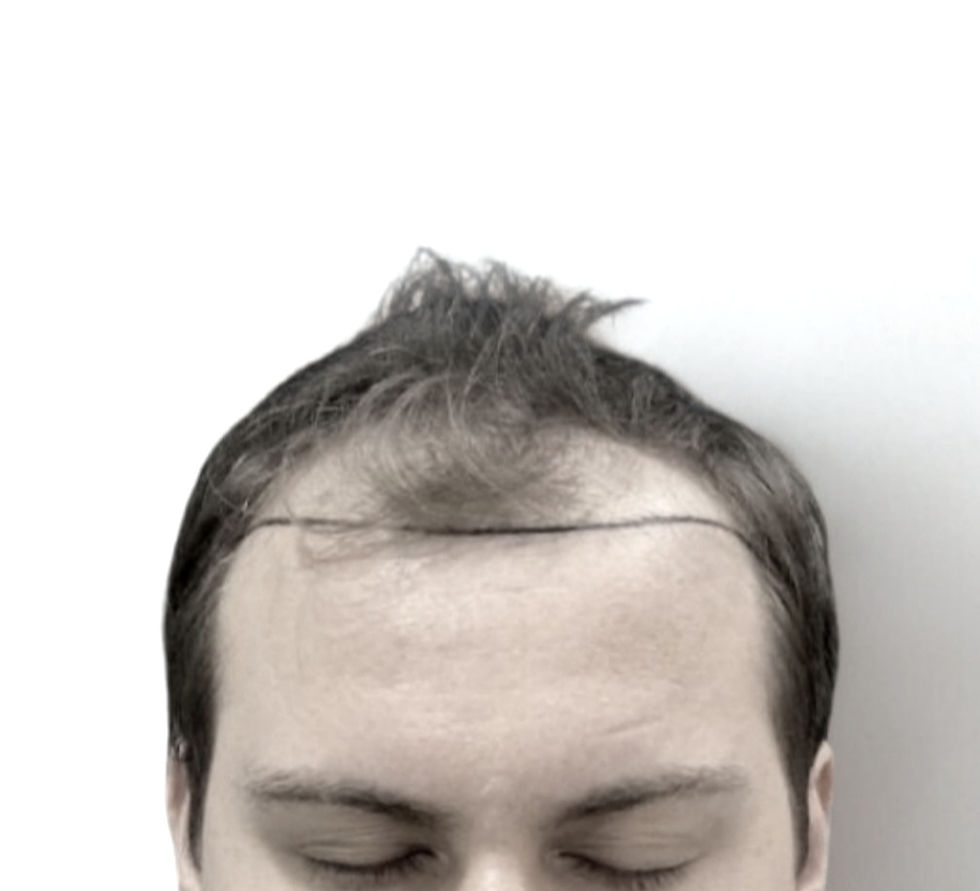
When patients begin researching hair restoration, the conversation often shifts quickly toward how many grafts can be taken in a single session. A more responsible clinical approach starts somewhere else: with donor capacity, long-term planning, and the preservation of a natural-looking donor area after healing.
The donor region is not limitless. The safe donor zone, usually located across the back and sides of the scalp, is the foundation of surgical restoration because these follicles are generally more resistant to androgenetic hair loss. Once a follicular unit is extracted, however, it does not regenerate in that same location. For that reason, every extraction is a permanent decision, and the donor area must be managed with care.
This is why donor preservation matters so much. A successful transplant should improve the recipient area without leaving the back of the head visibly depleted. The donor region should remain balanced, discreet, and naturally dense enough that the surgery does not announce itself once the hair is worn short.
The challenge lies in maintaining that visual integrity while still achieving meaningful restoration. This is where over-harvesting becomes a concern. When too many grafts are taken from too concentrated an area, the donor zone can begin to look thin, patchy, or uneven. In practical terms, this is one of the clearest signs that extraction has not been planned with enough restraint.
A careful surgical approach therefore relies on diffused extraction. Rather than taking grafts in dense clusters or clearing visible rows for the sake of speed, the extraction pattern should be spread evenly across the donor landscape. This preserves the visual continuity of the area and helps the remaining native hair cover the tiny extraction points more effectively.
The goal is not simply to remove follicles. The goal is to remove them in a way that protects the donor area’s appearance and preserves enough reserve for the future. In many cases, this means using a measured strategy that respects both the current restoration plan and any potential later procedures.
At Eva Estetica, donor capacity is treated as a planning question, not a target to be maximized. The decision is based on the patient’s scalp characteristics, donor density, pattern of loss, and long-term needs. That is what allows the result to remain refined in the front while the donor area continues to look calm, natural, and intact over time.
A well-planned transplant should restore hair without exposing the mechanics of the surgery. That balance is the true standard of donor management.
Preservation Is Not About Doing Less It Is About Doing
What Is Right

Patients sometimes hear the language of restraint and assume it means a weaker or less ambitious result. This is a misunderstanding.
Donor preservation is not the refusal to restore effectively. It is the refusal to restore carelessly.
A well-preserved donor area can still support meaningful change. It can still create strong frontal framing, improved density, and visible transformation.
The difference is that these improvements are pursued with judgment. The plan is built around what is aesthetically necessary and biologically sustainable, not around the maximum that can technically be extracted on a given day.
This distinction matters because refined work is not defined by how much is done. It is defined by how correctly the right amount is done.
Sometimes that means a broader session is appropriate. Sometimes it means a more selective first stage. Sometimes it means leaving certain zones lighter in order to preserve reserve for future support. Sometimes it means advising patience instead of intensity.
In all of these cases, preservation is still serving beauty It is simply doing so with intelligence.
A donor area that remains healthy, balanced, and available is one of the quietest signs that a treatment plan was approached with seriousness. Patients may not always appreciate that immediately because preservation is less dramatic than visible density. But over time, it often becomes one of the clearest indicators that the work was good.
(Read More on Aesthetic Success: Discover why sheer graft volume is a poor metric for beauty in Beyond Graft Numbers: What Actually Determines a Successful Hair Transplant Result)
Donor Preservation Supports More Natural Results

There is a profound aesthetic reality to donor preservation: it is the exact mechanism that ensures the final result looks entirely authentic.
A procedure that aggressively exhausts the donor estate to chase maximum density creates structural problems far beyond the back of the head. When clinical planning is driven by extraction volume rather than architectural harmony, the design itself becomes unnatural. The frontal hairline may become overwhelmingly dense, resulting in a restoration that is visually louder than the mature face can comfortably carry. In these instances, the design loses its necessary softness because it was engineered around supply rather than anatomical proportion.
Strict preservation actively protects against this aesthetic failure.
It encourages a highly disciplined rhythm of planning—one where grafts are allocated with precision, visual density is distributed intelligently, and the overall restoration is allowed to seamlessly settle into the face rather than dominate it. This restraint supports a softer, more layered, and infinitely more believable outcome because it resists the commercial urge to turn every available follicle into immediate visible force.
This is one of the quiet paradoxes of elite hair restoration: the most sophisticated, refined results are rarely those where the donor was pushed to its absolute limits, but rather those where it was protected most intelligently. True naturalness relies on a delicate synthesis of variables—micro-transitions, hairline transparency, facial geometry, donor integrity, and lifelong biological coherence.
Preservation gives the design the necessary space to breathe and age with dignity. Excess only serves to permanently narrow that space.
What a Good Consultation Should Reveal About the Donor Area

A serious consultation should make donor preservation visible as part of the conversation.
The patient should come away understanding not only the visible problem in front, but the biological reserve behind it. He should understand that the donor area is not abstract. It has character, density, limits, and aesthetic consequence. He should also understand that graft numbers are meaningful only in context, and that responsible planning may involve saying no to certain expectations if they place too much strain on the donor.
This is where trust matters.
A good consultation does not flatter the patient with numbers alone. It explains the relationship between donor reserve, current goals, and future possibilities. It clarifies whether the case is suited to broader work, selective work, staged work, or perhaps more restraint than the patient first imagined. It teaches the patient to see preservation not as a disappointment, but as part of how a result is protected from becoming shortsighted.
At Eva Estetica, this is why donor assessment is central to the design conversation. The donor does not merely support the plan. It shapes the plan. And a team that speaks honestly about the donor is often revealing something deeper: that it values the patient’s long-term outcome more than the appeal of a dramatic immediate promise.
That is the kind of honesty good work depends on.
Conclusion
When you begin your hair restoration journey, it is entirely natural to focus exclusively on what you wish to restore. However, true clinical artistry requires an equal, unwavering focus on what must be protected.
At Eva Estetica, we regard donor preservation not as a surgical footnote, but as the central discipline of hair restoration. It is the defining metric that determines whether a procedure has been planned ethically and intelligently. A masterful transplant does not simply relocate follicles from one zone to another; it treats your scalp as a unified, whole canvas. It creates distinguished beauty in the facial frame without ever compromising the structural integrity of the back of the head.
This is exactly why we value profound restraint, measured surgical planning, and long-term biological stewardship. We understand that the most refined result is not always the one that uses the most grafts immediately. It is the result that ensures no finite resource is wasted, no native tissue is weakened, and no immediate visual improvement is purchased at a hidden cost to your future flexibility.
In the precise discipline of medical aesthetics, beauty depends not only on what is added. It depends entirely on what is meticulously preserved.
Your enduring result begins with a considered blueprint—one that honors your facial geometry, grants your donor area the exact same seriousness as your hairline, and fiercely protects the years ahead.
Frequently Asked Questions: Understanding the Donor Estate
1. Will hair grow back in the donor area after a hair transplant?
No. A Follicular Unit Extraction (FUE) is a permanent relocation. Once a graft is removed from the safe donor zone at the back of the scalp, it will not regenerate in that original spot. This strict biological reality is precisely why managing the finite donor estate with extreme care is the foundation of responsible hair restoration.
2. What does FUE over-harvesting mean?
Over-harvesting occurs when a high-volume approach extracts an excessive number of grafts—often to satisfy a commercial demand for "maximum density"—stripping the donor area beyond its safe biological threshold. This results in a patchy, transparent, or "moth-eaten" appearance at the back of the scalp that is exceptionally difficult to repair.
3. How many grafts can safely be extracted in a single session?
While individual anatomical capacity varies, elite clinical protocols dictate that no more than 25 to 30 percent of the native density should ever be extracted in a single pass. Taking more compromises the visual integrity of the scalp. The clinical focus must always remain on what can be safely utilized to achieve balance, not simply the maximum number that can be harvested.
4. Why is preserving donor hair necessary for the future?
Male pattern baldness is a progressive condition. If native, non-transplanted hair continues to thin over the coming decades, a preserved donor reserve ensures that sufficient grafts remain available for a staged, secondary restoration. Exhausting the donor area in a single, aggressive procedure effectively removes the ability to adapt to future aesthetic needs.
5. Will the donor area look scarred or patchy after a hair transplant?
When performed under strict, master-level protocols, the donor area remains entirely natural and visually untouched to the naked eye. However, in environments that rush extractions, utilize overly large surgical punches, or ignore spatial awareness, visible dot scarring and patchiness are common and permanent consequences.
6. How is visible thinning in the donor area prevented during surgery?
The gold standard of care relies on a technique known as homogenous extraction. Instead of clearing entire blocks of hair, ultra-fine micro-motor punches are used to extract one follicle while deliberately skipping the surrounding three or four. This diffuses the extraction evenly across a wide surface area, allowing the remaining native hair to seamlessly conceal the microscopic sites.
7. What happens if a donor area is completely depleted by previous surgeries?
A bankrupt donor estate is a profound clinical challenge. If the biological reserve at the back of the scalp has been exhausted, traditional restoration options are severely limited. While advanced repair techniques may explore limited body hair extraction, true aesthetic balance often becomes impossible to achieve, underscoring the absolute necessity of strict donor stewardship during the very first surgery.
8. What exactly is the "safe donor zone"?
The safe donor zone is a specific, horseshoe-shaped band of hair resting at the back and sides of the scalp. Follicles in this specific region possess a genetic immunity to Dihydrotestosterone (DHT), the hormone responsible for pattern baldness. This immunity ensures that these hairs will remain robust and permanent once relocated to the thinning areas of the scalp.
9. Why is donor preservation particularly critical for younger patients?
Younger patients are in the earliest stages of their biological hair loss trajectory. What appears as an isolated temporal recession today may naturally evolve into mid-scalp or crown thinning over the next ten years. Guarding their donor reserve fiercely protects them against an unpredictable future, ensuring they have the biological capital to maintain facial harmony as their pattern matures.
10. Does extracting fewer grafts mean the final transplant will lack density?
Not at all. True visual density is achieved through architectural proportion, proper follicular angulation, and the strategic manipulation of light—not merely sheer volume. By precisely angling the required grafts to create an overlapping canopy, a dense, highly natural illusion is created in the recipient area, while the donor area remains safely intact.


Comments