Diffuse Thinning vs Receding Hairline: Why the Diagnostic Difference Matters

Updated: Jun 7
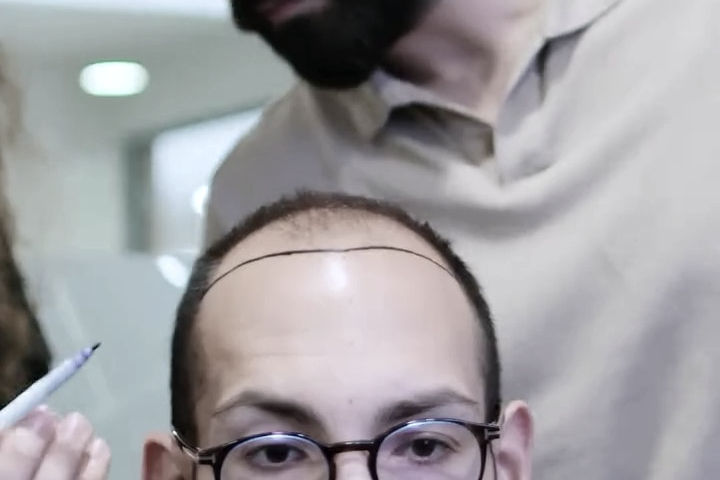
When hair loss first begins to manifest, the instinctive reaction for most individuals is to look closely at the mirror and evaluate the frontal hairline. However, androgenetic alopecia (pattern baldness) does not present itself uniformly across every individual. While some experience a highly localized, predictable retreat of the frontal border, others experience a quiet, widespread loss of density across the entire upper scalp.
Understanding the distinction between diffuse thinning vs a receding hairline is not merely an exercise in self-diagnosis. In the realm of elite hair restoration, this difference dictates your entire long-term therapeutic roadmap, your surgical candidacy, and the preservation of your finite donor reserve.
At Eva Estetica, we believe that a successful restoration begins with a meticulous biological audit. Here is a deep breakdown of how these two manifestations differ, how they impact the scalp's vascular network, and what they mean for your candidacy for a permanent hair transplant.
Table of Contents: Diffuse Thinning vs Receding Hairline
The Receding Hairline: A Study in Localized Patterns

A receding hairline is the classic, textbook manifestation of male pattern baldness (androgenetic alopecia). Unlike the ambiguous nature of generalized thinning, a receding hairline follows a highly predictable, geometric progression characterized by a clear, distinct boundary between healthy hair and bare skin.
For many men, this progression typically begins forming a distinct "M," "V," or "U" shape at the front of the scalp.
The Biology of the Retreat
This localized pattern is driven entirely by genetics and hormones. The hair follicles stationed at the frontal corners (the temporal peaks) possess a remarkably high genetic sensitivity to Dihydrotestosterone (DHT)—the hormone directly responsible for hair follicle miniaturization.
Over time, DHT binds to the receptors in these specific frontal follicles, causing them to shrink, produce weaker hairs, and eventually stop producing hair altogether. These boundaries slowly erode backward, often leaving the mid-scalp and the vertex (crown) completely untouched in the early to moderate stages of hair loss.
The Surgical Advantage: A Clean Architectural Canvas
From a clinical and surgical perspective, a classic receding hairline offers a very straightforward architectural blueprint. Because the hair loss is compartmentalized, it presents the surgical team with what is essentially a blank canvas.
This localized pattern provides two massive advantages for a hair transplant procedure:
Absolute Structural Clarity (Defined Recipient Sites): The areas requiring restoration have clear, bare boundaries. The clinical team can focus entirely on executing a precise, mathematically balanced hair transplant hairline design without having to navigate an "obstacle course" of existing native hairs. Because there is no native hair in the recipient zone to accidentally damage with surgical tools, the risk of localized shock loss (temporary shedding) is virtually eliminated.
Robust Donor Capital (Secured Donor Integrity): In classic patterned baldness, the genetic sensitivity to DHT is heavily concentrated at the front and top of the scalp. Because the hair loss is strictly patterned, the traditional donor zone at the back and sides of the head remains highly stable. This provides a robust, DHT-resistant biological reserve, allowing the surgeon to safely harvest the necessary grafts while preserving enough donor capital for the future should your crown eventually thin as you age.
The Clinical Perspective: A receding hairline fundamentally alters the frame of your face, which is why it often causes immediate cosmetic anxiety. However, structurally speaking, it is the most predictable and straightforward condition to treat, allowing a master clinical architect to design a timeless, customized border that restores your natural facial proportions.
Diffuse Thinning: The Invisible Erosion of Density

Unlike the clear-cut boundaries of a receding hairline, diffuse thinning is characterized by a uniform decrease in hair density across specific zones of the scalp, without an immediate shift in the baseline position of the frontal hairline.
A patient suffering from diffuse thinning might maintain their original hairline shape, yet notice that their scalp becomes increasingly visible under direct overhead lighting or when the hair is wet. In clinical practice, this presentation generally splits into two distinct biological categories:
1. Diffuse Patterned Alopecia (DPA)
DPA is a form of hair loss where significant miniaturization occurs across the entire top of the head—from the hairline all the way back to the crown. Crucially, however, the donor area at the back and sides generally remains more stable and resistant to DHT-induced miniaturization, though its long-term boundaries still require careful clinical evaluation.
2. Diffuse Unpatterned Alopecia (DUPA)
DUPA is a far more complex and challenging condition. In DUPA, the follicle miniaturization is not confined to the top of the head; it affects the entire scalp, including the traditional donor area. This means the hair at the back of your head may be just as susceptible to thinning as the hair on top, making it an unstable resource for transplantation.
Deep Dive: Understanding the genetic stability of your follicles is the most critical phase of hair restoration. Discover how we assess donor capacity and structural integrity in our guide on what makes a hair transplant result look undetectable.
The Norwood Scale vs. Diffuse Thinning: Tracking Hair Loss Progression

When dermatologists and hair restoration surgeons map out male pattern baldness, they primarily rely on the Norwood Scale—a classic seven-stage classification system. However, the Norwood Scale was fundamentally designed to track the clear, geometric boundaries of a receding hairline and a thinning crown.
If your hair loss is presenting as a uniform drop in density across the entire top of your head, trying to fit your progression into a standard Norwood stage can be highly confusing:
1. The Receding Hairline Progression:
Follows the strict Norwood trajectory (Stages 1 through 7). It begins with minor recession at the temples (Stage 2), deepens into a distinct "M" shape (Stage 3), and progresses until the entire frontal half is smooth before connecting with a balding crown.
2. The Diffuse Thinning Progression:
Often bypasses the frontal recession stages entirely. Instead, it mirrors a pattern more closely aligned with the Ludwig Scale (traditionally used to classify female diffuse hair loss) or the specialized "Norwood Diffuse Variant." The hairline stays anchored at a Norwood Stage 1 or 2, but the underlying density drops uniformly across the front, mid-scalp, and vertex simultaneously.
Tracking how your hair loss progresses is vital for long-term diagnostic accuracy. If you notice your part line widening or your scalp showing through when your hairline hasn't moved, you are tracking a diffuse variant. Recognizing this early allows for a much more proactive intervention before the native hair matrix undergoes advanced miniaturization.
The Female Presentation: Why Diffuse Thinning Dominates

While discussions around hair restoration often heavily feature male patients and the Norwood Scale, this entirely excludes how hair loss typically manifests in women.
For female patients, a classic receding hairline driven by genetic pattern baldness is much less common. While Female Pattern Hair Loss (female androgenetic alopecia) predominantly presents as diffuse thinning across the mid-scalp, it is important to note that women can still experience frontal recession. However, when frontal loss does occur in women, it is frequently driven by entirely different clinical conditions—such as Traction Alopecia (caused by prolonged physical tension from tight hairstyles) or Frontal Fibrosing Alopecia (a scarring form of hair loss)—rather than standard genetic miniaturization.
When treating female genetic hair loss, the clinical framework shifts away from the receding hairline and focuses instead on The Ludwig Scale, which tracks the progressive loss of density across the top of the scalp:
Stage I (Mild): The frontal hairline remains completely intact, but the central parting line begins to noticeably widen. Scalp visibility increases under bright lighting.
Stage II (Moderate): The diffuse thinning expands laterally across the mid-scalp. The overall volume of the hair decreases significantly, and the widening part becomes difficult to camouflage with styling.
Stage III (Severe): Extensive, widespread thinning across the entire crown and top of the head. The hair becomes virtually transparent, though a thin band of the very front hairline often miraculously survives.
Surgical Candidacy for Female Diffuse Thinning
Because female genetic hair loss is inherently diffuse, women represent some of the most complex clinical cases in hair restoration. The primary diagnostic hurdle is ensuring that the thinning is confined to the top of the scalp and has not compromised the donor area at the back of the head.
If a female patient's donor area passes the microscopic audit and scarring conditions (like FFA) have been ruled out, they can be excellent candidates for advanced, no-shave Direct Hair Implantation (DHI) procedures. This allows our clinical team to meticulously increase density without the patient needing to shave their existing hair.
The Critical Intersection: How the Difference Dictates Surgical Candidacy

The core reason the distinction between diffuse thinning vs a receding hairline matters is that it fundamentally dictates your long-term surgical viability. A hair transplant is not a procedure that creates new hair; rather, it is an advanced process of biological relocation. It relies entirely on moving genetically stable, DHT-resistant follicles from the back of your scalp to the areas of depletion. If that biological "safe zone" is compromised, the entire architectural premise of the surgery collapses.
Before any surgical plan is finalized, a master clinical team evaluates how your specific pattern of loss fits into this diagnostic matrix:
Metric | Classic Receding Hairline | Diffuse Patterned Alopecia (DPA) | Diffuse Unpatterned Alopecia (DUPA) |
Donor Area Status | Highly Stable & Robust | Generally Stable (Requires Audit) | Miniaturized & Highly Unstable |
Surgical Candidacy | Excellent Candidate | Good Candidate (Requires Precision) | Not a Candidate for Surgery |
Primary Surgical Risk | Minimal | Risk of Shock Loss | Total Graft Failure / Over-harvesting |
Why DUPA is a Strict Surgical Contraindication
If an inexperienced or volume-driven clinic attempts to perform a hair transplant on a patient with Diffuse Unpatterned Alopecia (DUPA), the consequences are clinically disastrous. In a successful transplant, the transplanted hair relies on its inherent genetic resistance to survive permanently in its new location. In DUPA patients, this localized genetic resistance simply does not exist anywhere on the scalp.
Any grafts extracted from the back and moved to the front are essentially "ticking time bombs." Because they lack long-term genetic stability, they will briefly grow, only to eventually miniaturize, thin out, and fall out as they succumb to the exact same thinning process affecting the rest of the head.
Worse yet, the surgical extraction process leaves the already weakened donor area permanently depleted and visibly hollowed out. You are left with a scarred donor zone and a failed recipient zone—exhausting your biological reserve with zero long-term aesthetic benefit. A master clinician will always refuse to operate on a DUPA patient, pivoting instead to aggressive, non-surgical medical management to protect the hair that remains.
The Surgical Complexity of DPA: A Masterclass in Tissue Respect
Conversely, patients with Diffuse Patterned Alopecia (DPA) can be excellent candidates for surgery, provided their donor zone passes a rigorous microscopic audit. However, executing a transplant on a DPA patient demands a fundamentally different surgical approach, requiring an immensely higher level of clinical artistry than a standard receding hairline.
The primary challenge lies in the density of the surgical field. A DPA patient still possesses thousands of living, albeit thinning and vulnerable, native hairs directly in the recipient area. Every microscopic incision made to place a new graft requires localized blood flow. If a surgeon recklessly packs new grafts too closely to existing native roots, they risk severing the underlying capillary networks. This vascular trauma triggers surgical shock loss—an inflammatory response where the traumatized surrounding native hairs shed, and in severe cases, may not return. In this scenario, you risk losing one native hair for every new hair implanted, resulting in zero net gain in density.
The Precision Solution: To safely manage this delicate microscopic ecosystem, direct implantation techniques are utilized in carefully selected cases where working precisely between existing hairs matters. Operating under high-powered magnification, the clinical team uses specialized implanter tools to navigate around your existing native follicles with an elite degree of spatial awareness.
This meticulous approach allows the surgeon to gently part the existing native hairs and slide the new grafts into the tiny interstitial spaces at the exact natural angle and direction. By minimizing mechanical disruption to the surrounding capillary networks, the new grafts and the existing native hairs can safely share the localized blood supply, coexisting and thriving side-by-side to create a beautiful, dense canopy.
Deep Dive: Securing surgical candidacy isn't just about your biological diagnosis—it is also heavily dependent on timing. Operating too early on a biologically unstable scalp can compromise your long-term aesthetic. Discover exactly when to get a hair transplant and why not every patient should be treated immediately
Which is Harder to Treat? Diffuse Thinning vs Receding Hairline Success Rates

From a therapeutic and surgical standpoint, patients frequently look for a straightforward answer regarding which condition is harder to treat. The answer depends heavily on whether you are looking at treatment through the lens of non-surgical stabilization or a permanent hair transplant.
Non-Surgical Treatment Success Rates
When it comes to medical therapies (such as DHT blockers and localized vascular therapies), diffuse thinning actually boasts a higher early success rate than a fully receded hairline.
Because diffuse areas are packed with living, miniaturized hair follicles rather than bare, scarred skin, they possess high cellular responsiveness. Proactive medical therapy can successfully reverse miniaturization, thickening the existing "whisper" hairs and dramatically increasing overall scalp opacity without surgery. Conversely, once a hairline has fully receded and the skin is completely smooth, the follicles have senesced (died)—meaning surgery is the only path to restoration.
Surgical Hair Transplant Success Rates
When entering the operating room, the dynamic flips. A classic receding hairline typically offers a more straightforward surgical success rate with fewer immediate technical complications.
Receding Hairline Surgery: Working on completely bare skin requires no navigation around existing roots. The surgeon's focus is dedicated entirely to masterfully executing the angle, direction, and macro-irregularities of the new hairline design.
Diffuse Thinning Surgery: Requires meticulous precision to avoid cutting into or damaging surrounding native hair roots. It demands exceptional spatial awareness, advanced tool selection (like precision implanters), and strict tissue respect to protect your existing hair while weaving in new density.
Neither condition is impossible to treat. However, while a receding hairline allows a surgeon to build freely on a clear canvas, treating diffuse thinning requires an elite level of diagnostic auditing and microscopic precision.
The "Shock Loss" Recovery Timeline: Navigating the Shedding Phase

For patients with diffuse thinning (DPA) who undergo a hair transplant, the most anxiety-inducing part of the process is not the surgery itself—it is the immediate recovery phase. As mentioned earlier, navigating between thousands of existing native hairs can trigger surgical shock loss (temporary shedding of the native hair due to localized inflammation and vascular rerouting).
If you are treating diffuse thinning, it is clinically vital to understand that your hair may actually look slightly thinner before it looks thicker. This is a normal, expected biological response, not a surgical failure.
To alleviate this anxiety, our clinical architects map out the exact post-operative timeline you can expect:
Weeks 2 to 6 (The Shedding Phase): As the scalp heals from the microscopic incisions, the localized trauma pushes some of your surrounding native hairs—along with the newly implanted grafts—into a premature resting phase (telogen phase). These hairs will shed. This is the hardest psychological phase of the journey.
Months 2 to 4 (The Resting Phase): The scalp appears to be in a dormant state. The shed hairs are resting beneath the surface, and the follicle structures are actively rebuilding their blood supply.
Months 5 to 8 (The Rebound): The biological turnaround begins. The native hairs that suffered from shock loss begin to break through the scalp again, returning to their normal thickness. Simultaneously, the newly implanted grafts sprout, rapidly increasing your overall visual density.
Months 12 to 15 (Full Canopy Maturation): The final architectural result is realized. The native hair has fully recovered, and the transplanted grafts have matured, thickened, and seamlessly integrated with your existing hair to create a dense, opaque canopy.
When treating diffuse thinning, patience is not just a virtue; it is a clinical requirement. By preparing our patients for this specific timeline, we ensure they navigate the temporary shedding phase with absolute confidence.
Deep Dive: Want to learn how to minimize shedding and protect your native hair after surgery? Read our clinical protocols in our guide to preventing and managing surgical shock loss.
The Consultation: Your Step-by-Step Diagnostic Journey

Because diffuse thinning can easily mask its true biological identity, securing an accurate diagnosis requires far more than a visual guess. This is why attempting to diagnose complex diffuse patterns or confirm surgical candidacy using standard cell phone photographs is fundamentally flawed. Surface-level images cannot reveal the microscopic health of a hair follicle, the density of the donor reserve, or the underlying vascular environment.
At Eva Estetica, we treat the initial consultation not as a procedural formality, but as a rigorous medical audit. Your diagnostic journey follows a strict, multi-point clinical protocol:
1. Digital Trichoscopy Analysis (Mapping the Miniaturization)
We examine your scalp under extreme digital magnification to evaluate the microscopic diameter (caliber) of your individual hair shafts. By analyzing the hair across different geographic zones of your head, we can identify the exact percentage of miniaturization occurring in real-time. This allows us to see precisely where DHT is attacking the follicles long before the thinning becomes visible to the naked eye, ensuring we map and treat the true, invisible boundaries of your hair loss.
2. Donor Area Microscopic Audit (Validating the Safe Zone)
A hair transplant is only as successful as the long-term stability of the donor hair. We meticulously calculate the exact follicular unit density per square centimeter at the back and sides of your skull. During this audit, we specifically look for early, hidden signs of retrograde alopecia (thinning that creeps up from the nape of the neck) or subtle diffuse thinning encroaching on the safe zone. This mathematical validation ensures your donor estate is genuinely robust and healthy enough to harvest without leaving the back of your head structurally depleted.
3. Vascular and Medical History Evaluation (Ruling Out Systemic Triggers)
Not all hair loss is strictly genetic. We conduct a comprehensive review of your medical history to evaluate potential underlying systemic variables. Conditions such as telogen effluvium (acute, stress-induced shedding), severe nutritional deficiencies, or hormonal fluctuations can often mimic, or severely exacerbate, the appearance of diffuse thinning. By ruling out or addressing these metabolic triggers first, we ensure that we are treating the true biological cause rather than just applying a surgical fix to a temporary medical symptom.
By completing this comprehensive diagnostic framework, the clinical team transitions from guesswork to absolute certainty. The result is a highly personalized, mathematically sound treatment blueprint tailored specifically to your exact biological presentation.
Conclusion: Honesty in Architecture
Whether you are navigating a clear receding hairline or a subtle, diffuse loss of volume, the path forward must be built on clinical reality rather than marketing promises. A receding hairline requires a masterful eye for geometry and hairline design; diffuse thinning demands an obsessive commitment to tissue respect, advanced tool selection, and ethical candidate screening.
At Eva Estetica Istanbul, we treat your hair restoration not as a one-time transaction, but as a lifelong commitment to your appearance. By diagnosing your scalp with absolute transparency, we ensure that your treatment plan is mathematically sound, medically safe, and designed to look completely natural for the rest of your life.
Frequently Asked Questions: Diffuse Thinning vs Receding Hairline
1. What is the main difference between a receding hairline and diffuse thinning?
A receding hairline is a localized, structural retreat of the frontal boundary, usually forming an "M" or "V" shape on bare skin. Diffuse thinning is a widespread, generalized loss of density and volume across the entire top of the scalp, often occurring while the frontal hairline remains in its original position.
2. Can you get a hair transplant if you have diffuse thinning?
Yes, but only if you are diagnosed with Diffuse Patterned Alopecia (DPA) and have a stable donor area. Transplanting into diffuse thinning requires immense clinical precision to implant new grafts safely between your existing hairs without damaging them. If you have Diffuse Unpatterned Alopecia (DUPA), you are not a candidate for surgery.
3. Why does diffuse thinning look much worse under bright light or when wet?
Diffuse thinning is fundamentally an issue of opacity. As DHT attacks the follicles, the hair shafts miniaturize (become microscopically thinner). While they may look full in dim light, they can no longer block harsh overhead light from reflecting off your scalp. Water clusters these thin hairs together, exposing the bare skin underneath.
4. How does a clinic test for DUPA (Diffuse Unpatterned Alopecia)?
An elite clinic will never diagnose DUPA with the naked eye. We perform a high-definition digital trichoscopy audit to examine the back and sides of your head (the donor zone). If we detect a high percentage of miniaturized, thinning hairs in this "safe zone," it confirms DUPA, meaning surgical extraction is contraindicated.
5. Do hair loss medications work better for diffuse thinning or a receding hairline?
Medical therapies (like DHT blockers or localized vascular treatments) often yield better early visual results for diffuse thinning. This is because diffuse areas are full of living, miniaturized hairs that can be thickened and revitalized. Conversely, a completely receded hairline consists of fibrosed (dead) follicles, making surgery the only viable option for restoration.
6. Will a hair transplant for diffuse thinning cause me to lose my existing hair?
There is a clinical risk known as "surgical shock loss," where trauma to the scalp causes surrounding native hairs to shed. To prevent this, elite clinics use specialized direct implantation tools and high-powered magnification. This allows the surgeon to meticulously slip new grafts between native roots without severing their blood supply.
7. Can stress cause a receding hairline or diffuse thinning?
Severe stress does not cause a receding hairline—that is strictly driven by genetics and DHT. However, immense physical or emotional stress can trigger a condition called Telogen Effluvium. This causes rapid, widespread shedding that perfectly mimics diffuse thinning. Unlike genetic thinning, Telogen Effluvium is temporary and should not be treated with surgery.
8. Can I have a receding hairline and diffuse thinning at the same time?
Yes, this is a very common hybrid presentation. Patients frequently experience a structural retreat at the temporal corners while simultaneously losing volume across the mid-scalp and crown. Treating this requires a dual surgical strategy: building a dense new hairline from scratch at the front, and delicately weaving grafts between native hairs behind it.
9. Why is checking the donor area so critical for diffuse thinners?
Because diffuse thinning can sometimes be a symptom of a systemic issue or an unpatterned genetic condition (like DUPA), the donor hair at the back of the head might be unstable. Extracting from an unstable donor area leads to failed grafts and permanent scarring. A microscopic donor audit is the only way to guarantee the hair is safe to move.
10. How many grafts do I need to fix diffuse thinning?
Graft counts for diffuse thinning cannot be estimated purely by looking at the size of the balding area. It depends entirely on the caliber (thickness) of your remaining native hairs and the distance between them. Over-packing grafts into a diffuse area can cause vascular trauma; therefore, exact numbers are strictly calculated via digital trichoscopy.
Academic Sources and Clinical Literature
The diagnostic frameworks, microscopic evaluation techniques, and medical therapies discussed in this guide are strictly based on peer-reviewed dermatological research. For further reading on the pathophysiology of pattern baldness versus diffuse thinning, please consult the following clinical texts:
1. Androgenetic Alopecia: Pathogenesis and Clinical Classifications Ho CH, Sood T, Zito PM. StatPearls Publishing (2024). An authoritative clinical overview detailing the physiological mechanisms of Androgenetic Alopecia (AGA). This text explains how sensitivity to Dihydrotestosterone (DHT) targets specific zones of the scalp, creating the classic "receding hairline" pattern while leaving the donor area structurally intact.
View on NCBI Bookshelf: https://www.ncbi.nlm.nih.gov/books/NBK430924/
2. Is Every Patient of Hair Loss a Candidate for Hair Transplant? Deciding Surgical Candidacy Garg S, Garg S. Indian Journal of Plastic Surgery (2021). A crucial surgical review detailing the exact clinical differences between patterned hair loss (AGA) and Diffuse Unpatterned Alopecia (DUPA). The literature explicitly validates why patients presenting with DUPA are strict contraindications for hair transplant surgery, as their donor area lacks the permanent genetic resistance required for graft survival.
View on PubMed Central: https://pmc.ncbi.nlm.nih.gov/articles/PMC8719975/
3. Telogen Effluvium: A Review of the Literature Asghar F, Shamim N, Farooque U, et al. Cureus (2020). An essential medical review detailing Telogen Effluvium—a condition characterized by sudden, severe diffuse thinning across the entire scalp triggered by systemic stress, trauma, or nutritional deficiency. This literature helps differentiate permanent genetic thinning from temporary, reversible shedding.
View on PubMed Central: https://pmc.ncbi.nlm.nih.gov/articles/PMC7320655/
4. Finasteride in the Treatment of Men with Androgenetic Alopecia Kaufman KD, Olsen EA, Whiting D, et al. Journal of the American Academy of Dermatology (1998). A landmark, double-blind clinical trial demonstrating the efficacy of 1mg Finasteride. The data clinically proves that while DHT blockers are highly effective at halting miniaturization and reversing diffuse thinning across the mid-scalp and vertex, they are less effective at regrowing entirely slick-bald areas at the receding hairline.
View on PubMed: https://pubmed.ncbi.nlm.nih.gov/9777765/
5. Hair Transplantation: Surgical Safety and Contraindications Zito PM, Raggio BS. StatPearls Publishing (2024). A peer-reviewed surgical guide utilized in medical education. This text outlines the strict physiological limitations of hair transplantation, detailing the diagnostic protocols surgeons use to ensure patients with active inflammatory conditions or diffuse unpatterned alopecia are disqualified from surgery to prevent graft failure.
View on NCBI Bookshelf: https://www.ncbi.nlm.nih.gov/books/NBK547740/


Comments